
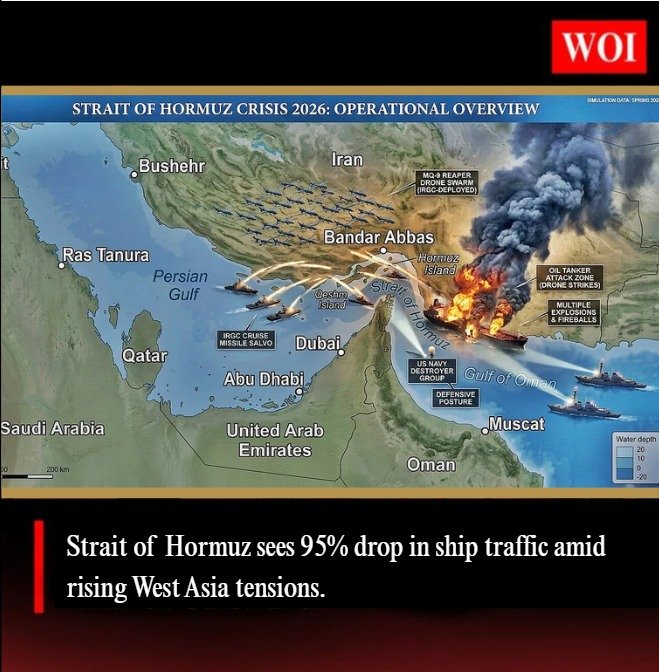
The ongoing West Asia conflict has severely disrupted global shipping as vessel movement through the Strait of Hormuz has dropped by nearly 95% since early March 2026. This dramatic decline has raised major concerns over global energy supply, as the strait carries around 20% of the world’s oil trade. The crisis highlights the vulnerability of global supply chains to geopolitical tensions in critical regions.
Amid the disruption, Iran has allowed passage only to select “non-hostile” countries, including India, China, and Thailand, based on diplomatic coordination and strategic relations. While some vessels from these nations have successfully crossed, many others remain stranded or face uncertainty due to unclear navigation rules and rising risks.
The slowdown in maritime traffic has already impacted global trade and oil markets, leading to increased shipping costs, higher insurance premiums, and potential fuel price hikes. As one of the world’s most important energy chokepoints, the Strait of Hormuz remains central to global economic stability, making the situation a critical concern for countries dependent on oil imports.
