
India’s Unified Payments Interface (UPI) has seen explosive growth, with annual transactions hitting ₹260 lakh crore in 2025 and accounting for 28% of retail payments. Initially popular for peer-to-peer transfers, UPI now powers 30% of merchant payments, replacing traditional modes like NEFT, whose share has fallen from 61% in FY18 to 48% in FY25.
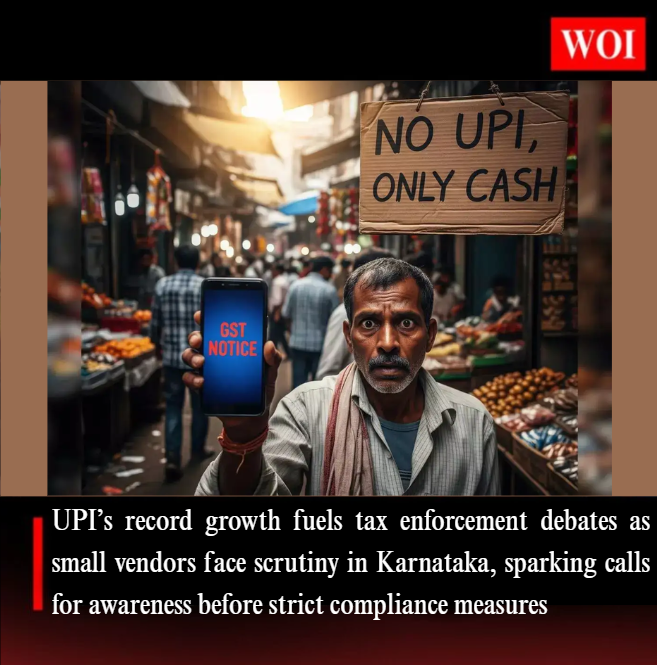
This rapid digitisation has also given tax authorities a powerful tool. In Karnataka, the Commercial Taxes Department analysed UPI transactions exceeding GST exemption limits, identifying thousands of unregistered vendors and issuing tax notices. While this could potentially boost GST collections by ₹1.5 lakh crore, it has triggered protests among small traders.
Under GST, businesses with turnover below ₹40 lakh for goods and ₹20 lakh for services are exempt, and a composition scheme exists for turnover up to ₹1.5 crore. However, many vendors—especially those selling both exempt and taxable goods—lack awareness of these rules. Some received large tax demands based solely on UPI data, often including personal or exempt sales.
Experts recommend that before strict enforcement, authorities conduct awareness campaigns, explain compliance benefits, and offer a grace period. This approach could maintain UPI’s momentum while ensuring fair taxation and preventing a shift back to cash transactions.
