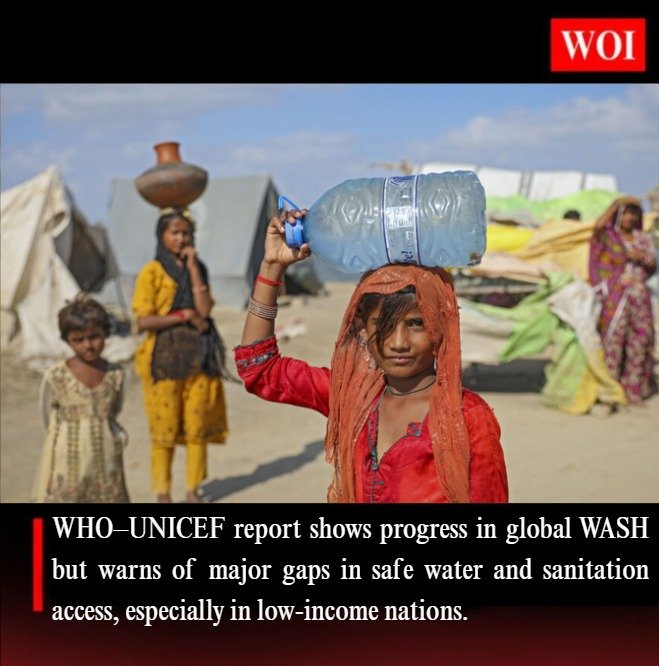
Access to safe water, sanitation, and hygiene (WASH) remains a pressing challenge in 2025, according to a joint WHO–UNICEF report. While global progress since 2000 is clear, deep inequalities continue to block the achievement of Sustainable Development Goal 6 (SDG 6) — universal access by 2030.
Progress Made
- From 2015–2024, 2 billion people gained safely managed sanitation.
- Global sanitation coverage rose from 48% to 58%, with open defecation eliminated in several regions including Latin America, Eastern and South-Eastern Asia.
- Access to safely managed drinking water increased from 68% to 74%, with rural areas showing the fastest improvements.
Persistent Gaps
- Low-income countries face open defecation rates four times the global average.
- People in least developed countries remain twice as likely to lack safe drinking water.
- Rural, indigenous, and marginalised communities, along with women, girls, and people with disabilities, bear the heaviest burdens.
Scale of Action Needed
To meet SDG 6, low-income nations must accelerate efforts drastically — achieving up to 18 times faster progress in sanitation and hygiene. Inclusive policies, better data collection, and stronger investments are critical to ensure no community is left behind.
Menstrual Health
The report also highlights menstrual health challenges in 70 countries, stressing its impact on education, health, and gender equality. Addressing this issue is key to achieving comprehensive WASH improvements.
