
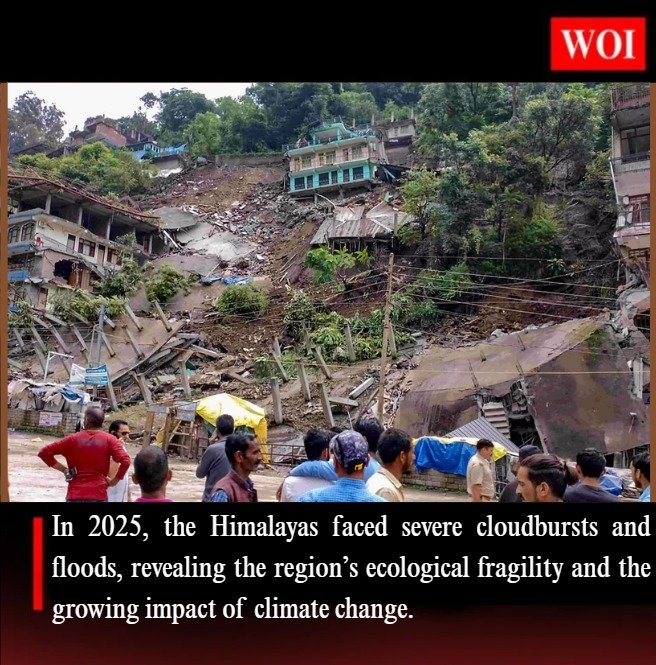
The year 2025 saw devastating environmental disasters across the Himalayan region and northern India, with cloudbursts, flash floods, and landslides causing hundreds of deaths and widespread destruction. Areas like Dehradun, Mandi, Mussoorie, and Gangotri in Uttarakhand, Himachal Pradesh, Jammu and Kashmir, and Punjab bore the brunt of these calamities, highlighting the fragile nature of the Himalayan ecosystem.
The Himalayas’ delicate geology makes the region highly susceptible to natural disasters. However, expanding infrastructure projects — including highways, hydropower plants, and road widening schemes like the Char Dham project — have destabilised slopes, exacerbating risks. These developments often violate environmental norms and overlook the region’s natural instability.
Cloudbursts produce intense, localized rainfall leading to sudden, powerful flash floods with enormous destructive energy. Climate change has intensified these weather patterns by accelerating glacier melt, increasing atmospheric moisture, and disrupting jet streams, resulting in more frequent extreme rainfall events.
Despite protective measures like the Bhagirathi Eco-Sensitive Zone, unchecked construction and deforestation continue to threaten ecological balance. Authorities face growing pressure to enforce environmental regulations, restrict construction in flood-prone areas, and improve disaster preparedness.
These disasters are not isolated to the Himalayas; they reflect a global trend of increasing climate-induced extreme weather events. Coordinated climate action, sustainable development, and better land-use planning are critical to reducing future risks and protecting vulnerable communities.
