
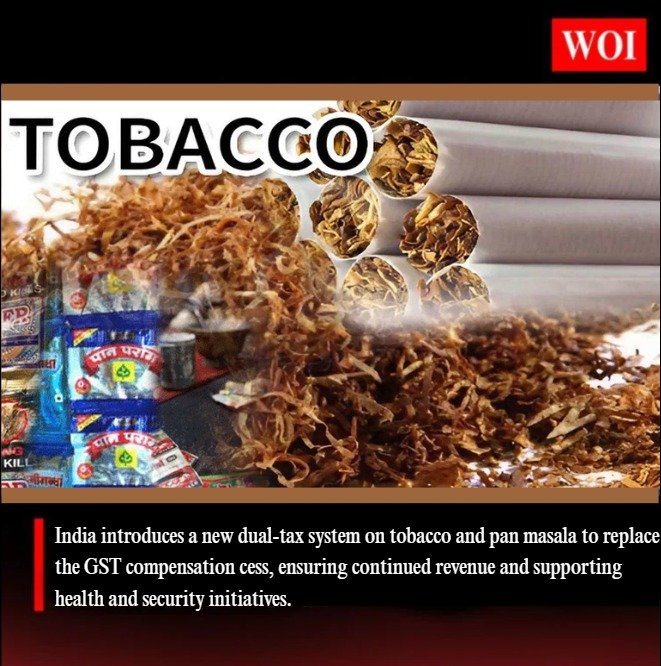
The Lok Sabha has approved the Central Excise (Amendment) Bill, 2025 and the Health and National Security Cess Bill, 2025, paving the way for a revised taxation system on tobacco, cigarettes, pan masala, and other demerit goods. These reforms come ahead of the phaseout of the GST compensation cess on March 31, 2026, ensuring that high taxation on sin goods continues without disrupting government revenue.
Why the Amendment Matters
The updated framework aims to maintain revenue stability after the withdrawal of the compensation cess, preserve high tax incidence on harmful products, and channel funds specifically toward public health and national security. It also supports repayment of loans taken during the pandemic to compensate states for GST revenue losses.
What Changes Under the New Law
The Central Excise (Amendment) Bill, 2025 introduces fresh excise duties on cigarettes, cigars, zarda, and other tobacco products — ranging from ₹5,000 to ₹11,000 per 1,000 sticks, along with high taxes on raw tobacco and nicotine-based products. These duties will apply in addition to the existing 40% GST.
The Health and National Security Cess Bill, 2025 levies a special cess on pan masala and future notified goods. Revenue from this cess will be earmarked for targeted national priorities and will not be shared with states.
Policy Significance
This dual-tax system ensures the overall tax burden on sin goods remains unchanged even after the compensation cess ends. The transition promotes fiscal discipline, discourages consumption of harmful products, and aligns India with global norms that direct sin-tax revenue toward societal welfare.
