
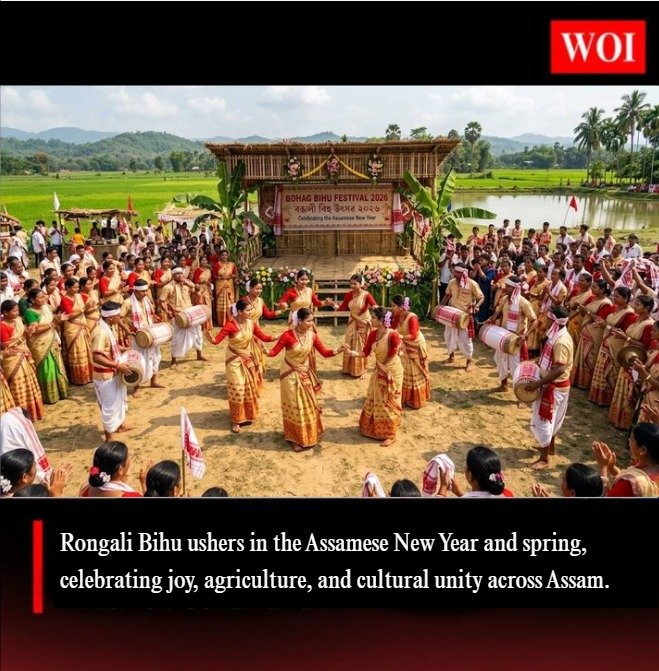
Rongali Bihu, also known as Bohag Bihu, is being celebrated with great enthusiasm across Assam, marking the beginning of the Assamese New Year and the arrival of spring. Considered the most vibrant and widely celebrated of the three Bihu festivals, Rongali Bihu symbolises joy, renewal, and hope, deeply rooted in the agrarian life of the region.
The festival coincides with the sowing season, making it especially significant for farming communities. Homes and courtyards come alive with the rhythmic beats of the dhol, melodious Bihu geet (folk songs), and energetic Bihu dance performances. Young men and women dressed in traditional attire—such as the mekhela chador for women and dhoti-kurta with gamocha for men—celebrate nature, love, and community bonding through dance and music.
A key cultural practice during Rongali Bihu is the exchange of the gamocha, also known as Bihuwaan, which symbolises respect, affection, and social harmony. Families come together for community feasts, traditional rituals, and prayers seeking prosperity and well-being in the year ahead.
Beyond its festive charm, Rongali Bihu reflects Assam’s rich cultural heritage and social inclusivity. Celebrated across communities irrespective of caste, creed, or religion, the festival reinforces unity and shared identity. In essence, Rongali Bihu is not just a celebration of a new year, but a reaffirmation of Assam’s living traditions, collective spirit, and cultural continuity.
