
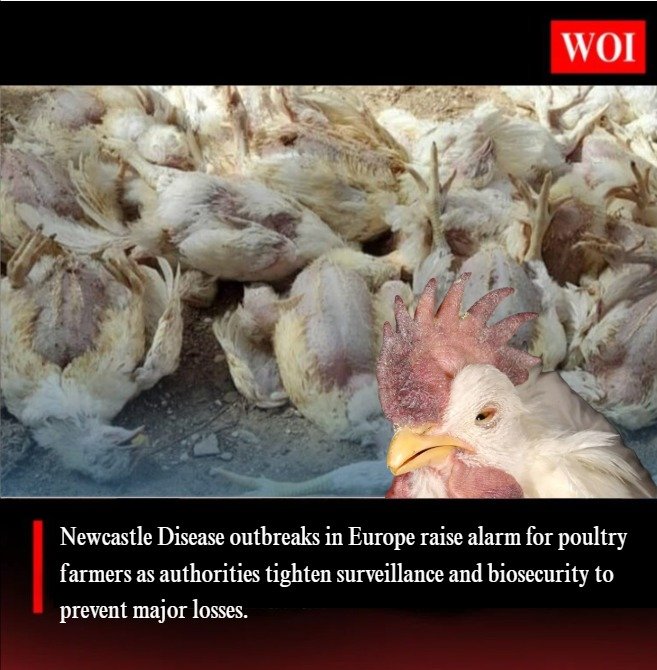
Newcastle Disease is spreading rapidly across parts of Europe in 2026, triggering heightened alert among poultry farmers and veterinary authorities. Countries including the United Kingdom have stepped up surveillance and biosecurity measures as the highly contagious viral infection threatens poultry health, farm livelihoods, and regional food supply chains.
The disease primarily affects domestic birds such as chickens, as well as wild birds, and is caused by avian paramyxovirus. Its danger lies in its fast transmission and potential to cause high mortality, especially in severe strains. Authorities warn that outbreaks can lead to large-scale culling, trade restrictions, and economic losses for farmers.
Newcastle Disease appears in three forms—mild (lentogenic), moderate (mesogenic), and severe (velogenic), with the last responsible for devastating outbreaks. The virus spreads through respiratory droplets, direct contact with infected birds, and contaminated feed, water, equipment, or clothing. Its ability to survive for long periods in carcasses and the environment makes containment challenging.
Infected poultry often show respiratory distress, nervous symptoms such as tremors or twisted necks, digestive issues, and reduced egg production. As there is no specific cure, prevention remains the only effective strategy. Strict farm biosecurity, routine vaccination, sanitation, and immediate isolation of infected birds are critical to controlling the spread.
Veterinary agencies across Europe continue to closely monitor the situation, urging farmers to remain vigilant as the disease poses a serious ongoing threat to the poultry sector.
