
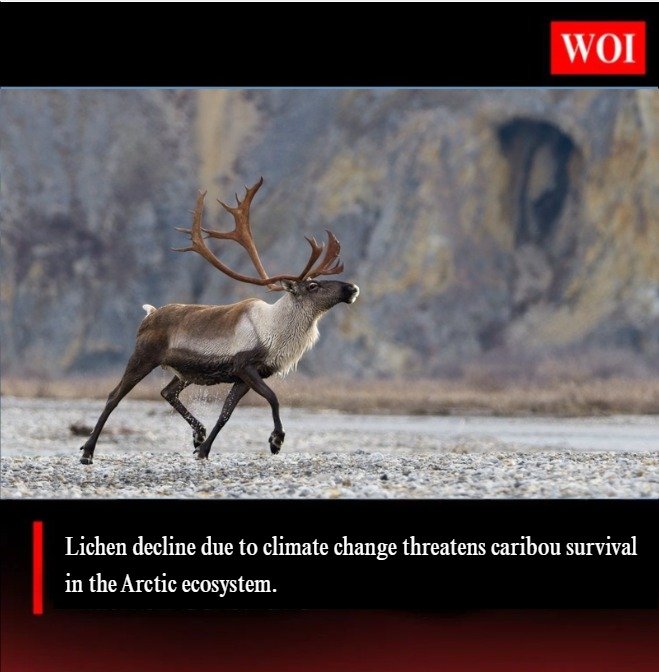
A recent study has raised serious concerns about the survival of caribou in the Arctic as declining lichen availability threatens their primary winter food source. Climate change and environmental stress are reducing lichen growth, putting pressure on already vulnerable populations.
Caribou, scientifically known as Rangifer tarandus, are uniquely adapted to extreme cold environments. Found across regions like Canada, Alaska, Greenland, and parts of Eurasia, they play a crucial role in Arctic ecosystems and indigenous cultures. One of their key survival behaviours is “cratering,” where they dig through snow to access lichen, which forms a major part of their winter diet.
These animals also possess remarkable adaptations such as the ability to see ultraviolet light, helping them detect food and predators in snow-covered landscapes. Both male and female caribou grow antlers annually, a rare trait among deer species.
However, the decline in lichen due to rising temperatures and changing snow patterns is emerging as a major threat. As a vital food source becomes scarce, caribou may struggle to survive harsh winters, potentially leading to population declines.
Currently listed as Vulnerable, caribou face increasing challenges from habitat loss and climate change. The latest findings highlight the urgent need for conservation efforts to protect both the species and the fragile Arctic ecosystem they depend on.
