
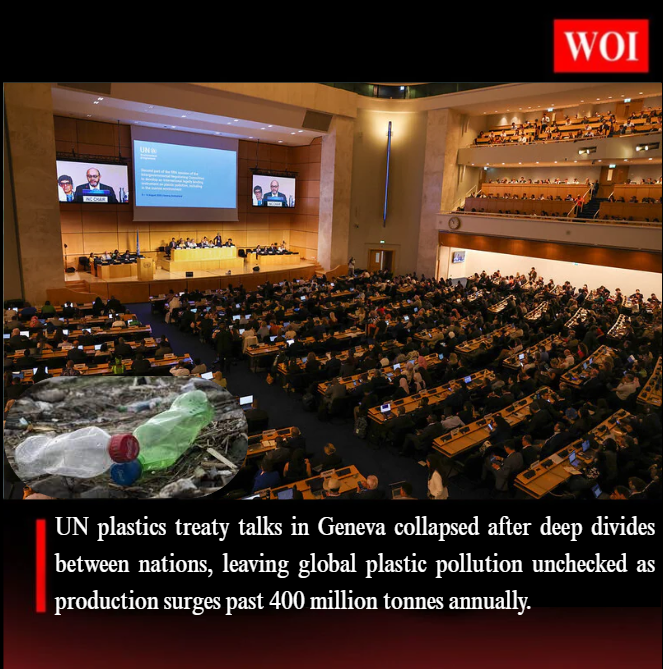
Efforts to forge a legally binding UN treaty on plastic pollution stalled in Geneva (INC-5.2, Aug 2025). Launched in 2022 by the UN Environment Assembly, the process aimed to control plastic pollution across its full life cycle—design, production, use, and disposal—but six negotiation rounds ended without a consensus text.
The deadlock reflects a hard split: a high-ambition coalition (EU members, small-island nations, and many Global South countries) pushed for binding limits on virgin plastic production and tighter control of toxic chemicals. Oil-producing and plastic-manufacturing states (including the U.S., Russia, Saudi Arabia and others) opposed caps, favoring voluntary actions focused on recycling and waste management. Small island states warned that failure threatens ecosystems and livelihoods; Uganda and Colombia decried procedural obstruction, while China signaled more openness to multilateral engagement.
Meanwhile, the numbers are stark: the world produces 400+ million tonnes of plastic annually, only 9–15% is collected for recycling and ~6–9% actually recycled. Without policy change, production could triple by 2060 to ~1.2 billion tonnes, with plastic waste likely exceeding one billion tonnes and roughly 20 million tonnes entering the environment each year.
Negotiators and UNEP say some (insufficient) progress was made and talks will resume. Many observers argue that a weak, symbolic pact would be worse than none, urging procedural reform—potentially shifting from unanimity to voting—to avoid minority vetoes and deliver a robust, enforceable agreement.
At a glance (from the summary):
- Outcome: No consensus; talks collapsed without an agreed text.
- Main division: High-ambition coalition vs. oil/plastics-producing nation-state opponents.
- Key figures: >400 Mt/year produced; ~9% truly recycled; projected ~1.2 Bt production by 2060.
- Affected parties: Small island nations (e.g., Tuvalu), Global South communities, environmental groups.
- Next steps: Resume negotiations; push for binding limits, full life-cycle chemicals regulation, and possible decision-making reforms.
