
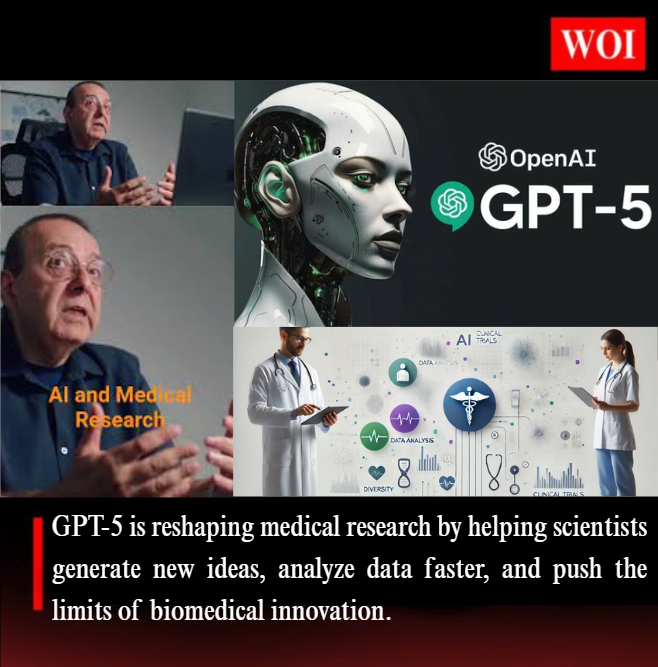
In a groundbreaking shift for scientific innovation, GPT-5 — OpenAI’s most advanced model to date — is proving to be a valuable collaborator in the field of medical research. Its ability to generate novel hypotheses, analyze complex datasets, and provide rapid insights is helping researchers accelerate the pace of discovery.
Immunologist and professor Dr. Derya Unutmaz is among the growing number of scientists integrating GPT-5 into their research process. He describes the AI as more than just a tool — it’s a “thinking partner” capable of suggesting new experimental directions and highlighting potential connections in scientific literature that may otherwise go unnoticed.
By streamlining hypothesis generation and preliminary analysis, GPT-5 frees up researchers to focus on critical experimental design and clinical validation. This partnership between human expertise and AI intelligence holds promise for pushing the boundaries of biomedical science, from understanding immune system mechanisms to developing new therapeutic approaches.
With applications spanning personalized medicine, vaccine development, and disease modeling, GPT-5 is redefining how technology can actively contribute to advancing human health.
