
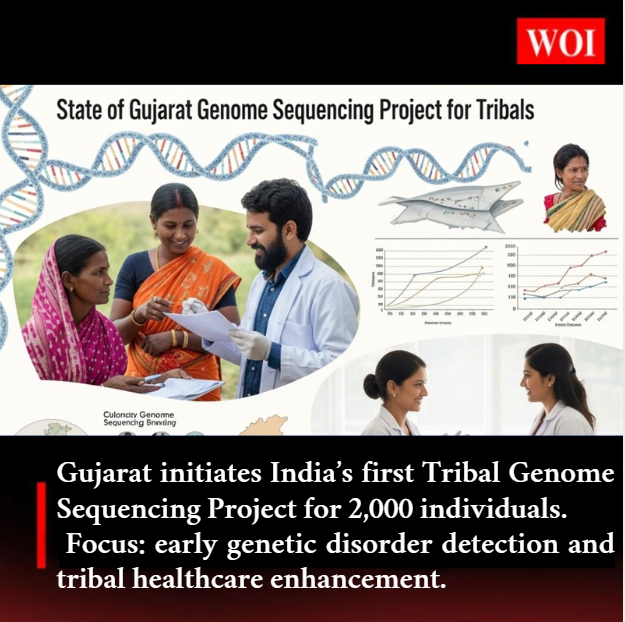
In a major healthcare initiative, the state of Gujarat has launched India’s first Tribal Genome Sequencing Project, aiming to enhance healthcare services for tribal communities. This landmark project will sequence the genomes of 2,000 individuals from tribal populations across 17 districts of Gujarat.
Objective and Scope:
The project is designed to identify genetic disorders early and provide targeted treatment for conditions such as sickle cell anaemia, thalassaemia, and hereditary cancers. The genetic data will also aid in understanding natural immunity and support the development of personalised healthcare solutions.
Utilisation of Genetic Data:
The collected genetic information will:
- Help identify genetic markers linked to diseases and immunity.
- Support precision healthcare strategies tailored to individual genetic profiles.
- Offer insights into population history, migration patterns, and genetic variations.
Scientific Applications:
Genome sequencing helps decode the entire DNA sequence of an organism. Techniques like Next-Generation Sequencing (NGS) and Third-Generation Sequencing (e.g., Nanopore, PacBio) are used for accurate analysis.
Broader Impact:
- Medicine: Improved diagnosis of genetic disorders, better drug response predictions (pharmacogenomics), and prenatal screening.
- Research: Advances in evolutionary biology, population genetics, and disease tracking.
- Agriculture & Environment: Enhancing crop traits and soil health through genetic insights.
This initiative sets a precedent for integrating genomics into public healthcare, especially for underserved tribal communities, and marks a significant step towards precision medicine in India.
