
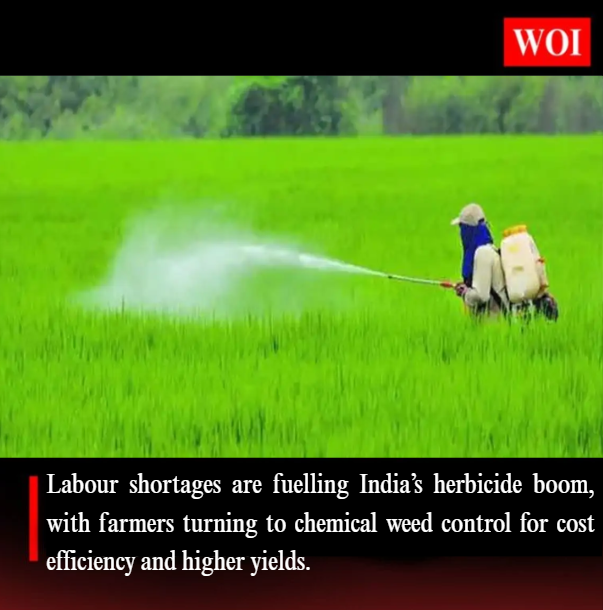
India’s crop protection chemicals sector is undergoing a shift in 2025, with herbicides emerging as the fastest-growing segment. The shortage of agricultural labour is pushing farmers toward chemical weed control, which saves time, reduces costs, and boosts crop yields.
The organised crop protection market is worth about ₹24,500 crore, led by insecticides (₹10,700 crore), followed by herbicides (₹8,200 crore) and fungicides (₹5,600 crore). Herbicides are expanding over 10% annually, replacing labour-intensive manual weeding and less effective power weeders.
Global firms like Bayer, Syngenta, ADAMA, Corteva, and Sumitomo dominate the market, but Indian players such as Dhanuka Agritech and Crystal Crop Protection Ltd (CCPL) are expanding through acquisitions and innovation. CCPL, for instance, acquired brands like Ethoxysulfuron and Gramoxone, and launched ‘Sikosa’, a patented, cost-effective paddy herbicide.
Farmers are also shifting from reactive weed control to preventive pre- and early post-emergence applications, improving efficiency. With rising wages and fewer workers available during critical periods, herbicides are becoming as essential as tractors in modern Indian farming.
