
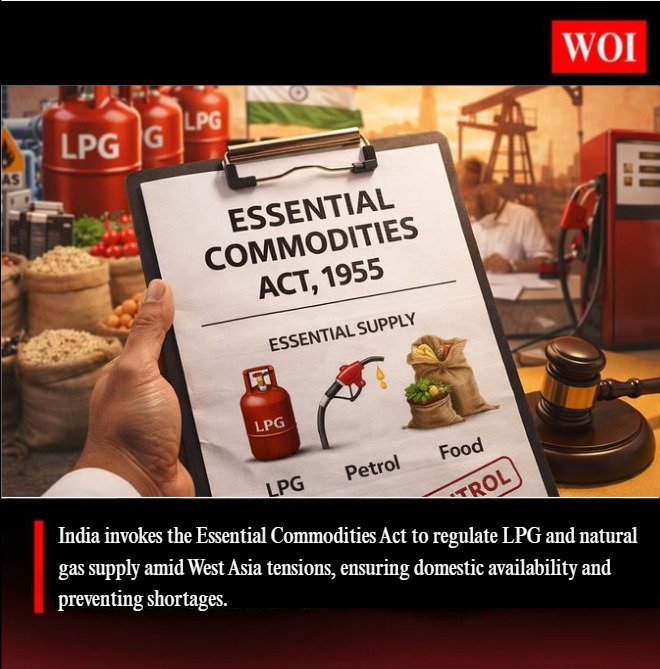
The Government of India has invoked the Essential Commodities Act (ECA), 1955 to safeguard the supply of Liquefied Petroleum Gas (LPG) and natural gas amid rising geopolitical tensions in West Asia. The decision comes after the conflict involving Israel, the United States, and Iran on February 28, 2026, which raised concerns about potential disruptions in global energy supply chains.
To prevent domestic shortages and ensure stable availability of cooking gas and fuel, the Ministry of Petroleum and Natural Gas has issued directives regulating the production, distribution, and allocation of LPG and natural gas across the country.
Under the new measures, oil refineries have been instructed to maximise LPG production, particularly by utilising propane and butane streams, which cannot be diverted to petrochemical manufacturing. Public sector Oil Marketing Companies (OMCs) have also been directed to prioritise LPG supply for domestic households. In addition, a 25-day booking window for LPG cylinders has been introduced to discourage hoarding.
The government has also introduced the Natural Gas (Supply Regulation) Order, 2026, which prioritises natural gas allocation for critical sectors. These include domestic piped natural gas (PNG) consumers, CNG used in transportation, and fertiliser manufacturing plants, ensuring that essential services and agricultural production remain unaffected.
The Essential Commodities Act, 1955 allows the government to regulate the production, supply, and distribution of vital goods to prevent shortages, price spikes, and hoarding during emergencies. By invoking this law, the government aims to stabilise energy supplies and protect consumers from potential disruptions caused by global conflicts.
