
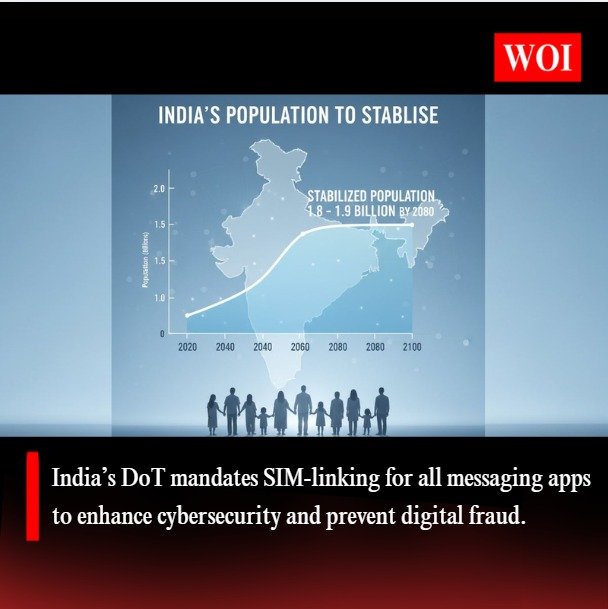
India is entering a significant demographic transition, with the total fertility rate (TFR) dropping to 1.9 from 3.5 in 2000. Experts now predict that the country’s population will stabilise between 1.8 and 1.9 billion by 2080, reflecting the impact of education, economic progress, and reproductive awareness.
The decline in TFR below the replacement level of 2.1 is driven by several factors: rising female literacy and education, wider access to contraceptives and healthcare, delayed marriages due to career aspirations, and lifestyle changes resulting from economic growth. States like Kerala (TFR 1.5) and West Bengal (TFR 1.3) have already achieved low fertility levels, highlighting the regional variation in India’s demographic transition.
While population stabilisation offers economic and environmental benefits, it also presents challenges, including an ageing population, potential workforce shortages, and rural-urban migration pressures. Strategic planning for elder care, labour sustainability, and balanced development will be critical in harnessing the opportunities of this demographic shift.
- India’s TFR dropped from 3.5 (2000) to 1.9 (2025).
- Population projected to stabilise at 1.8–1.9 billion by 2080.
- Female education, delayed marriages, and access to healthcare drive fertility decline.
- Kerala and West Bengal report some of the lowest TFRs.
- Challenges include ageing population, workforce sustainability, and migration imbalances.
