
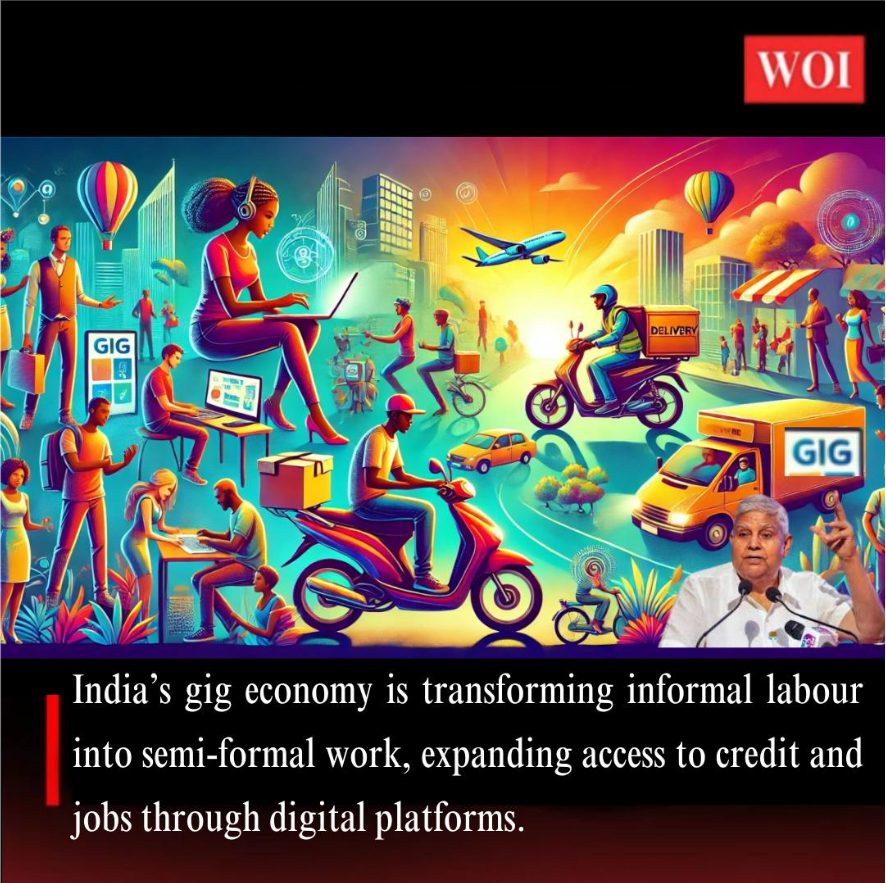
India’s gig economy is undergoing a significant transformation, with the workforce expanding from 7.7 million in 2020–21 to an estimated 12 million by FY 2024–25. Driven by digital connectivity, urbanisation, and changing work preferences, gig workers—ranging from ride-hailing drivers to online freelancers—now make up over 2% of the country’s workforce.
Gig work offers flexibility and income opportunities without traditional employment benefits. Unlike fully informal labour, gig jobs often involve digital documentation of tasks and payments, marking a shift toward semi-formal employment. This not only brings greater visibility to workers but also opens pathways to financial inclusion.
With digitised income records, many gig workers can now access formal credit, though traditional scoring systems often fail to reflect their earning patterns. In response, new credit models and embedded finance solutions are being developed using platform data and behavioural analytics. India’s Account Aggregator framework also helps streamline secure financial data sharing.
Looking ahead, the gig workforce could reach 23.5 million by 2030, contributing significantly to GDP and job creation. However, issues like income instability, lack of social protection, and safety need attention. Addressing these will ensure the gig economy becomes a sustainable and inclusive part of India’s labour landscape.
