
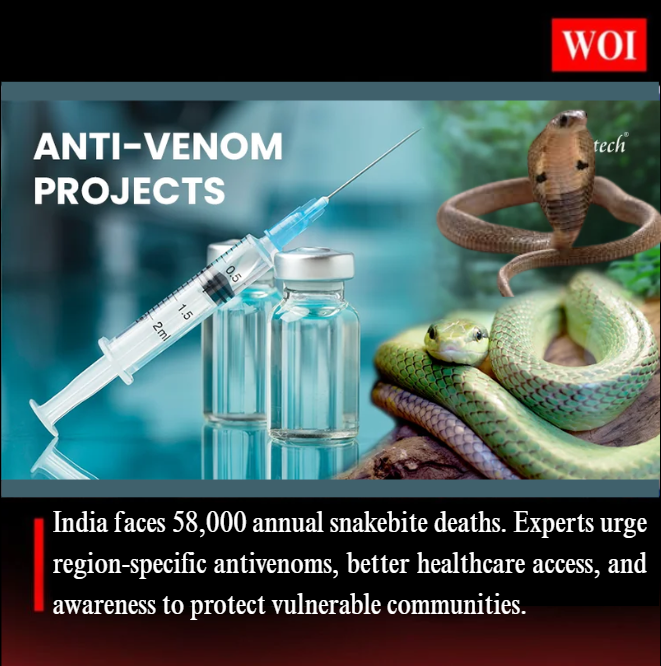
Snakebite envenoming kills nearly 58,000 people in India every year, with rural communities bearing the highest burden. The standard antivenom, made from the “Big Four” snakes, is less effective in regions like the Northeast, where species such as the monocled cobra, green pit viper, and local kraits are more common.
Experts are urging the creation of Regional Venom Centres and serpentariums to collect local venom and develop tailored antivenoms. Such initiatives could greatly improve treatment success and reduce fatalities.
Most deaths occur due to delays in reaching medical care and reliance on traditional healers. To tackle this, India launched a National Action Plan in 2024 to cut deaths by half by 2030. Assam is also planning a State Steering Committee, a serpentarium, and a digital platform to track bites and coordinate responses.

Strengthening rural healthcare, raising awareness, and investing in region-specific research are key to saving lives and reducing the human toll of snakebites in India.
