
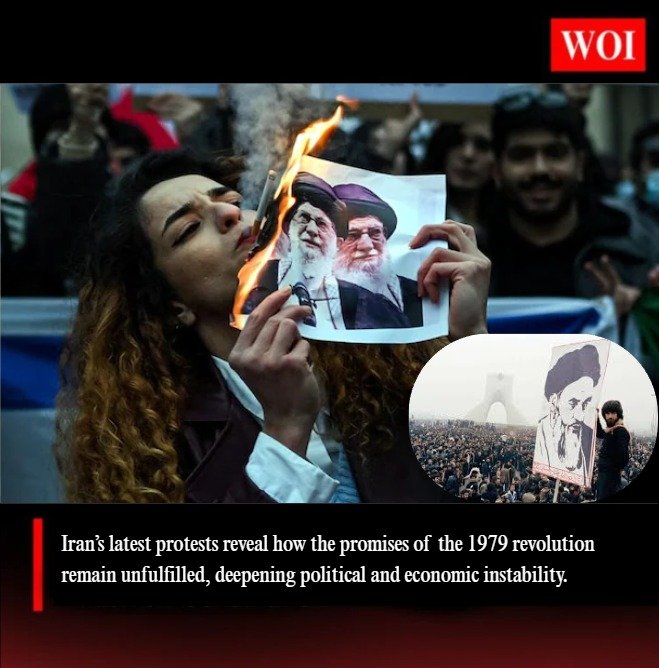
More than four decades after the 1979 Iranian Revolution promised independence, freedom and social justice, these ideals remain unfulfilled for much of the population. Instead, the Islamic Republic faces growing domestic unrest marked by political repression, economic hardship and international isolation. The latest nationwide protests, beginning in Tehran’s Grand Bazaar and spreading rapidly, reflect a long erosion of revolutionary legitimacy rather than a sudden break.
What began as a movement to end authoritarian rule and foreign domination has resulted in a system where dissent is criminalised and daily life is tightly controlled. Economic conditions have worsened under inflation, unemployment and corruption, widening the gap between the state and society. Repeated protest movements over the years have been suppressed but never eliminated, re-emerging in more open and radical forms.
The involvement of the Grand Bazaar, once a key supporter of the regime, signals a deeper shift in public sentiment. The state’s response — internet shutdowns, arrests and force — has become routine, yet fear is no longer enough to silence dissent. As internal pressures mount and regional tensions persist, Iran’s unresolved revolutionary promises continue to fuel instability at home and abroad.
