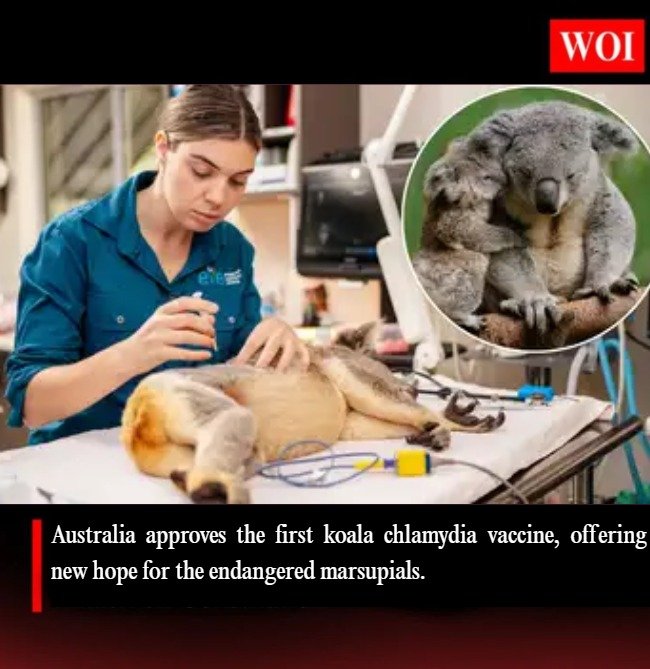
Australia has approved the world’s first vaccine to protect koalas from chlamydia, marking a major breakthrough in wildlife conservation. Developed over a decade by the University of the Sunshine Coast, the single-dose vaccine reduces disease symptoms and mortality in wild populations by up to 65%. It will now be used in veterinary clinics, wildlife hospitals, and field projects.
Why It Matters
Chlamydia is one of the deadliest threats to koalas, causing blindness, infertility, and death. Infection rates in some colonies reach 70%. Traditional antibiotics often harm koalas by disrupting their ability to digest eucalyptus leaves, their only food source.
Beyond the Vaccine
While the vaccine offers new hope, conservationists stress that habitat destruction from urban expansion, wildfires, and climate change remains the biggest long-term threat. Without urgent action, koalas—already endangered in Queensland, NSW, and the ACT—could face extinction by 2050.
Government Support
The project received significant backing, including a 76 million AUD Saving Koalas Fund. Environment Minister Murray Watt called the vaccine a vital step to safeguard koalas’ reproductive health and survival.
About Koalas
Koalas are iconic marsupials, known for their eucalyptus diet and tree-dwelling lifestyle. Population estimates range widely, from fewer than 100,000 (Australian Koala Foundation) to 524,000 (National Koala Monitoring Program).
This vaccine is a critical tool, but experts warn it must be combined with habitat preservation to truly secure the future of Australia’s beloved koalas.
