
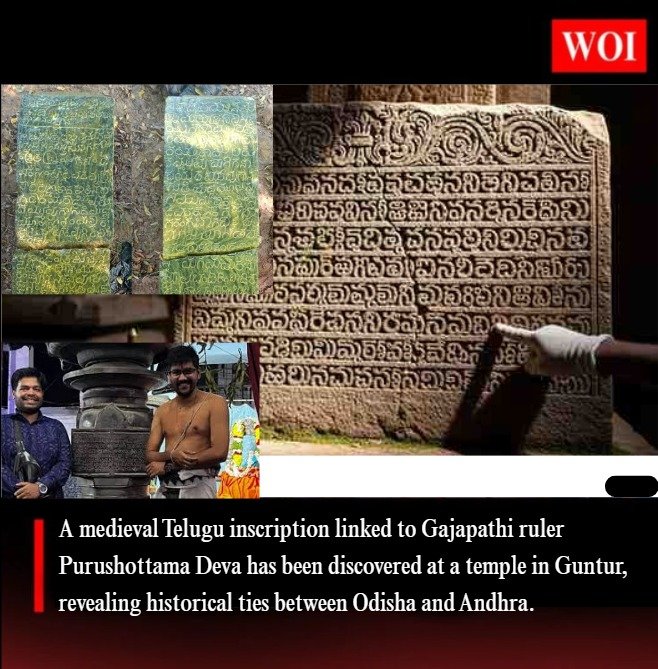
A medieval Telugu inscription associated with the Gajapathi Dynasty of Odisha has been discovered at the Lakshmi Narasimha Swamy Temple in Guntur, Andhra Pradesh. The inscription, engraved on a stone pillar inside the temple mandapa, provides new insights into the political and cultural connections between Odisha and coastal Andhra during the late medieval period.
Epigraphist Bishnu Mohan Adhikari identified the inscription as belonging to the reign of Purushottama Deva, a prominent 15th-century ruler of the Gajapathi kingdom. The text refers to Kumaraguru Mahapatra, a steward serving under the king, indicating the administrative presence of the Gajapathi rulers in parts of present-day Andhra Pradesh.
Local tradition suggests that the idol of Lord Narasimha and the temple pillars were brought from Kondaveedu Fort during medieval invasions. The inscription also records instructions regarding temple rituals, including offering milk during evening worship and assigning the care of temple cattle to designated communities.
Historians say such inscriptions highlight the religious patronage and administrative reach of the Gajapathi rulers, who promoted both Shaiva and Vaishnava traditions through the concept of Hari-Hara worship. The discovery offers valuable evidence of the historical and cultural links between Odisha and the Andhra region during the medieval era.
