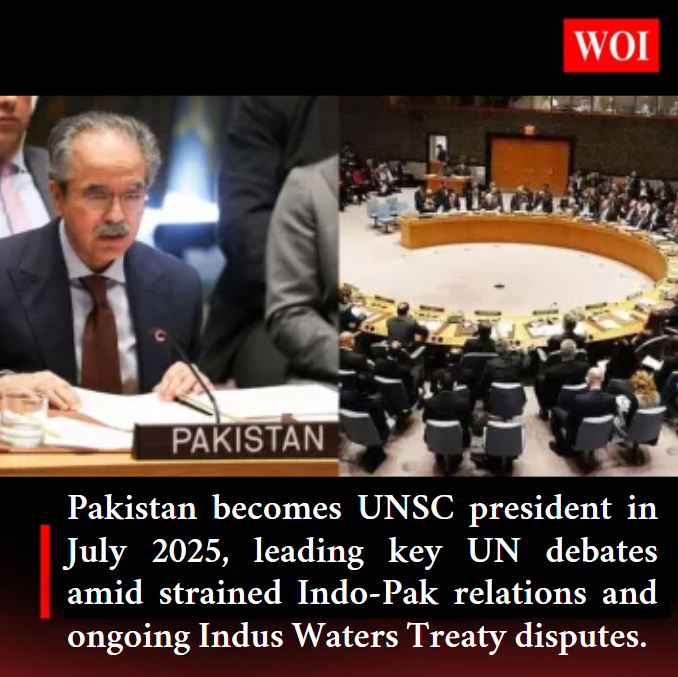
In July 2025, Pakistan took over the rotating presidency of the United Nations Security Council (UNSC) for the first time since 2013. This comes at a sensitive time, with heightened tensions between India and Pakistan, especially over cross-border terrorism and the Indus Waters Treaty (IWT).
Pakistan is set to chair two high-level meetings:
- July 22: Debate on Promoting International Peace and Security through Multilateralism
- July 24: Briefing on UN Cooperation with Regional Organisations
Both meetings will be led by Pakistan’s Deputy Prime Minister and Foreign Minister Ishaq Dar.
The UNSC has 15 members (5 permanent, 10 non-permanent) and its presidency rotates monthly. Although it holds no veto power, it allows the presiding nation to set the agenda and shape diplomatic focus.
India–Pakistan Context:
India fears that Pakistan may use its position to raise issues like Kashmir or portray itself as a peace advocate. India is likely to counter these narratives diplomatically.
Tensions escalated after India suspended the Indus Waters Treaty in April 2024, following the Pahalgam terror attack. Pakistan later moved the Permanent Court of Arbitration (PCA), which ruled against India. However, India rejected the ruling as unilateral and non-binding, emphasizing its preference for bilateral resolution.
