
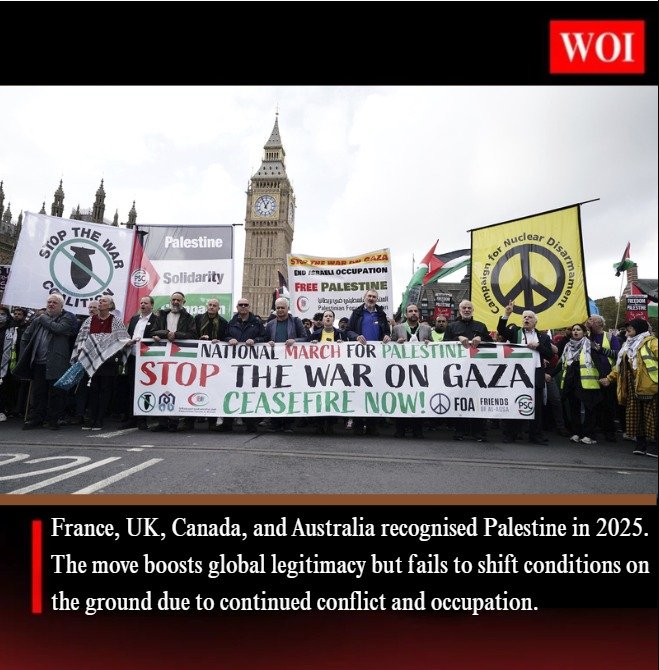
In 2025, a significant diplomatic shift unfolded as several global powers—including France, the United Kingdom, Canada, and Australia—officially recognised the State of Palestine. These moves, following earlier recognition by countries like Portugal, Belgium, and Luxembourg, signal growing international support for Palestinian statehood. However, the development has also sparked sharp criticism from Israel and has yet to bring tangible changes on the ground.
Diplomatic Recognition vs. Ground Reality
While recognition enhances Palestine’s international legitimacy, it has not halted the ongoing Israeli military campaign in Gaza. Prime Minister Benjamin Netanyahu continues to oppose the creation of a Palestinian state. Some European nations have limited arms exports to Israel, yet major allies like the U.S. and Germany maintain strong military support for Israel, leaving the broader conflict largely unaffected.
Legal and Territorial Hurdles
Under the Montevideo Convention of 1933, a state must have a defined territory, a permanent population, a functioning government, and the ability to engage internationally. Though recent recognition supports Palestine’s claim to international engagement, its fragmented territorial control and governance—divided between the Palestinian Authority in the West Bank and Hamas in Gaza—undermine its sovereignty. Continued Israeli occupation and settlement activity further erode Palestinian claims to statehood.
Humanitarian and Political Challenges
More than 65,000 Palestinians have died in the Gaza conflict, with millions displaced and facing famine. Governance remains divided and weak, with international calls for reform and disarmament unmet. While recognition opens doors in global institutions, Palestine’s effective sovereignty remains elusive without an end to occupation and meaningful peace negotiations.
Global recognition marks a diplomatic milestone but highlights the deep disconnect between international politics and ground realities in Palestine. The future of Palestinian statehood hinges on both global diplomatic pressure and fundamental changes in Israeli policy.
