
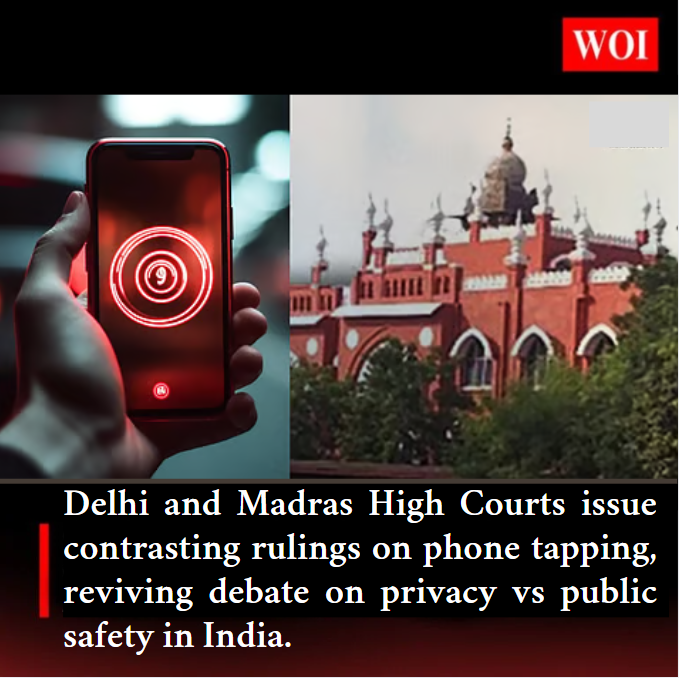
In 2025, two significant High Court rulings have brought fresh attention to the legality of government phone tapping in India, especially before a crime is committed. While the Delhi High Court upheld phone interception in a high-value corruption case, the Madras High Court struck down interception in a tax evasion case, citing a lack of public emergency and procedural flaws.
Legal Framework
Phone tapping is governed by:
- Indian Telegraph Act, 1885 (Section 5(2))
- Indian Post Office Act, 1898
- Information Technology Act, 2000
Under the Telegraph Act, interception is allowed only during a public emergency or in the interest of public safety, and must align with Article 19(2) of the Constitution.
Key Judgments
- Delhi HC: Allowed interception in a ₹2,000 crore corruption case, ruling it posed a threat to public safety and governance.
- Madras HC: Rejected interception in a ₹50 lakh bribery case, stating tax evasion does not qualify as a public emergency and noted procedural violations.
Safeguards
As per the Supreme Court’s 1997 PUCL verdict, only the Home Secretary (central/state) can authorize taps, and decisions must be reviewed by a high-level committee within two months.
Broader Impact
The conflicting decisions highlight a legal grey area in balancing national security and individual privacy. With the rise of digital communication, courts and lawmakers face increasing pressure to define lawful surveillance in a way that upholds constitutional rights in the digital era.
