
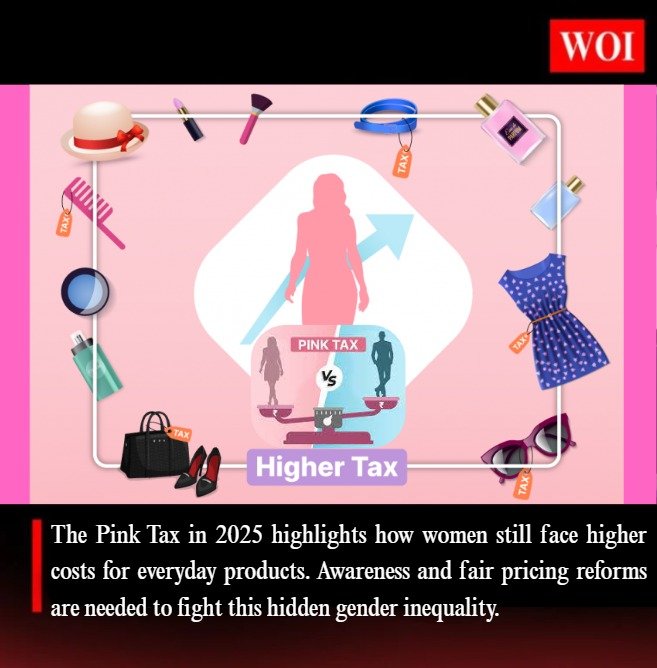
The Pink Tax continues to burden women worldwide in 2025, highlighting how products and services marketed to women often cost more than similar ones for men. Though not an actual tax, it reflects a pricing pattern that quietly impacts household budgets.
What is Pink Tax?
It refers to higher prices on women’s products like personal care items, clothing, haircuts, and even toys, compared to men’s equivalents. For instance, studies in the U.S. show women’s personal care products cost about 13% more. Similar patterns exist in the U.K. and other countries.
Pink Tax in India
In India, awareness remains low, with 67% of people unaware of the issue. A positive step came in 2018 when GST was removed from sanitary napkins and tampons. However, many everyday items still carry gender-based pricing differences, with no specific law banning the practice.
How to Fight It?
Consumers can reduce the Pink Tax by buying gender-neutral or men’s products, comparing prices online, and supporting unisex services. Awareness campaigns and consumer advocacy also push companies toward fair pricing.
Why It Matters
The Pink Tax is a form of hidden gender inequality that affects economic fairness. Eliminating it requires consumer action, government oversight, and corporate responsibility.
