
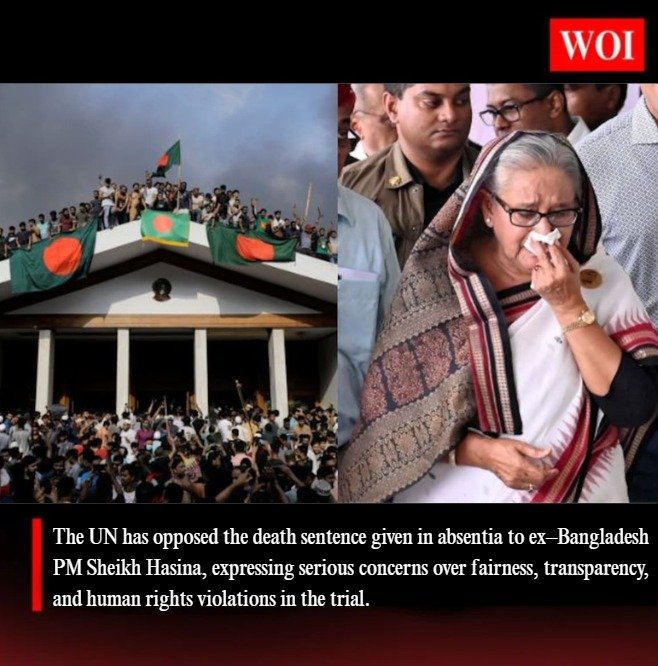
The United Nations has strongly criticised the death penalty issued in absentia to former Bangladesh Prime Minister Sheikh Hasina, calling the verdict inconsistent with international fair trial standards. The sentence was delivered by Bangladesh’s International Crimes Tribunal over alleged crimes against humanity linked to the government’s crackdown on student protests in 2024.
UN Secretary-General António Guterres, through spokesperson Stéphane Dujarric, reiterated the UN’s firm stance against capital punishment under any circumstances. The UN also expressed concern over the transparency and legality of trials conducted without the accused being present.
Hasina, now in exile, was convicted alongside former Home Minister Asaduzzaman Khan Kamal, who also received a death sentence. Former police chief Chowdhury Abdullah Al-Mamun, who turned state witness, was handed a five-year jail term.
The UN Human Rights Office, led by Volker Türk, noted that in absentia trials involving the death penalty must meet the highest international legal standards — a threshold they believe was not sufficiently ensured in this case. The development has intensified global scrutiny of Bangladesh’s judicial process, raising serious questions about due process, political bias, and human rights protections.
