
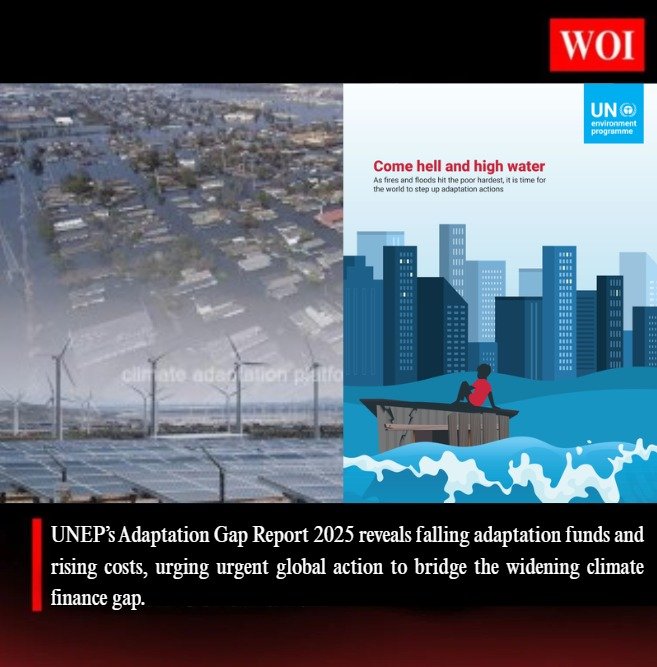
UNEP Adaptation Gap Report 2025 Warns of Rising Costs and Shrinking Climate Funds
The United Nations Environment Programme (UNEP) has released its Adaptation Gap Report 2025, sounding a stark warning that developing countries face surging climate adaptation costs even as international public finance continues to decline. The report, unveiled amid Jamaica’s recovery from Hurricane Melissa, calls adaptation a “lifeline” and urges faster, grant-based support alongside stronger mitigation efforts to manage escalating climate risks.
Adaptation Finance Gap Widens
According to the report, international public finance for adaptation fell to US$26 billion in 2023, down from US$28 billion in 2022 — deepening the global adaptation funding gap to US$284–339 billion annually. The current flow of funds covers only a small portion of what vulnerable nations need to combat intensifying floods, heatwaves, and tropical storms.
Skyrocketing Costs by 2035
By 2035, developing countries will require US$310–365 billion every year to adapt to climate change, based on 2023 prices. Adjusted for inflation, the total could soar to US$440–520 billion annually, underscoring the urgency of debt-free, concessional finance to avoid worsening financial vulnerabilities.
Missed Targets and Global Shortfalls
The Glasgow Climate Pact goal of doubling adaptation finance from 2019 levels to US$40 billion by 2025 is now off track. While COP29 established a New Collective Quantified Goal (NCQG) of US$300 billion per year for overall climate finance by 2035, this amount — when split between mitigation and adaptation — still falls short of projected needs. The Baku to Belém Roadmap calls for concessional, non-debt-creating mechanisms to ensure vulnerable nations aren’t further burdened.
Policy Progress and Private Sector Role
Most developing nations now have at least one national adaptation policy or plan, though many need updates. While 2024 saw a temporary rise in pledges through the Adaptation Fund, GEF, and Green Climate Fund, UNEP warns this may not mark a lasting trend amid tightening global budgets. The report urges expanded private sector involvement, estimating potential contributions of up to US$50 billion annually through de-risked and blended finance models — but stresses that public funding remains irreplaceable.
Exam-Oriented Facts
- Adaptation finance (2023): US$26 billion (down from US$28B in 2022)
- Projected needs (2035): US$310–365 billion annually (2023 prices)
- Inflation-adjusted needs: US$440–520 billion per year by 2035
- Glasgow goal (2025): Doubling 2019 finance to US$40B — off track
- New COP29 goal: US$300 billion per year for total climate finance
