
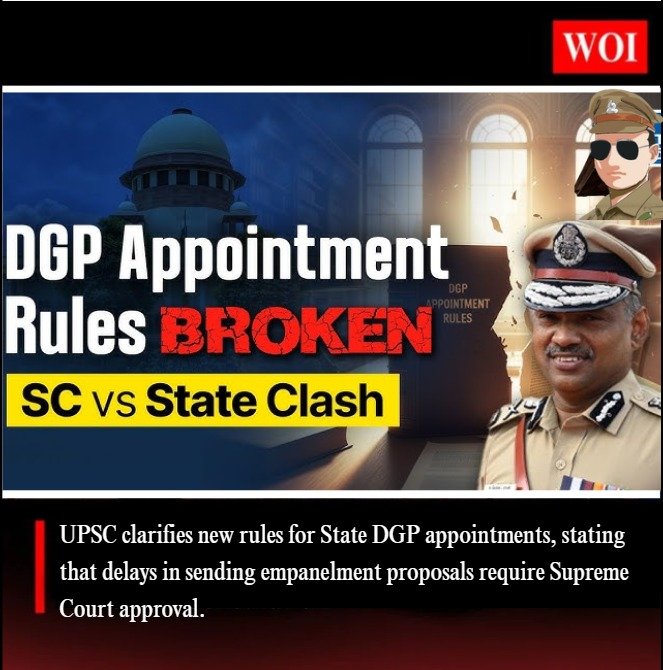
The process for appointing State Directors General of Police (DGPs) has been strengthened following new directions involving the Union Public Service Commission (UPSC) and the Supreme Court of India. The UPSC has clarified that state governments cannot delay sending the names of eligible DGP-rank officers for empanelment without prior approval from the Supreme Court. The decision comes after concerns that several states were violating earlier court guidelines and delaying the appointment process.
According to the Supreme Court’s directives issued in the Prakash Singh vs Union of India police reforms case, state governments must send the list of eligible senior police officers at least three months before the retirement of the incumbent DGP. Based on this list, the UPSC prepares a panel of three officers, from which the state government selects one candidate to head the police force.
The Supreme Court has also emphasized that there is no legal concept of an “acting DGP.” The court observed that appointing temporary or acting police chiefs undermines the stability and independence of police leadership envisaged under police reform guidelines.
The revised clarification came after the UPSC sought legal advice from the Attorney General of India regarding repeated delays by state governments in forwarding proposals. The Attorney General stated that such delays are legally unjustified and that the UPSC cannot ignore violations of the court’s timeline.
With the new rule, any delay in sending DGP appointment proposals will now require explicit approval from the Supreme Court, ensuring greater transparency and adherence to the legal framework governing police leadership appointments in India.
