
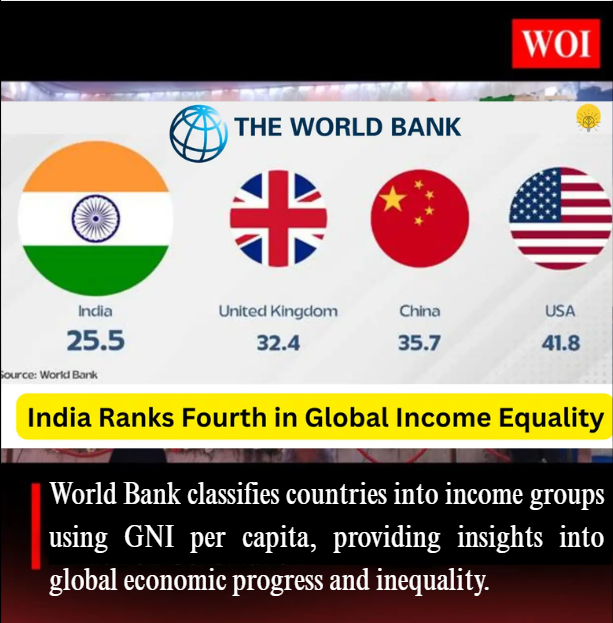
The World Bank’s income classification system is a vital global tool that categorizes countries into four groups based on Gross National Income (GNI) per capita:
- Low income: $1,135 or less
- Lower-middle income: $1,136 to $4,495
- Upper-middle income: $4,496 to $13,935
- High income: Over $13,935
These thresholds, adjusted annually for global inflation, allow for consistent cross-country comparisons.
The system began in the late 1980s to guide lending policies but now serves primarily for statistical and policy analysis. It reflects a country’s average income, including income earned abroad, standardized in USD.
Over the past two decades, many countries have progressed into higher income brackets, showcasing global economic development. However, conflict-hit nations like Syria and Yemen have regressed to lower tiers due to prolonged crises.
The classification helps policymakers, researchers, and global institutions assess economic trends and strategize development efforts across varying income levels.
