
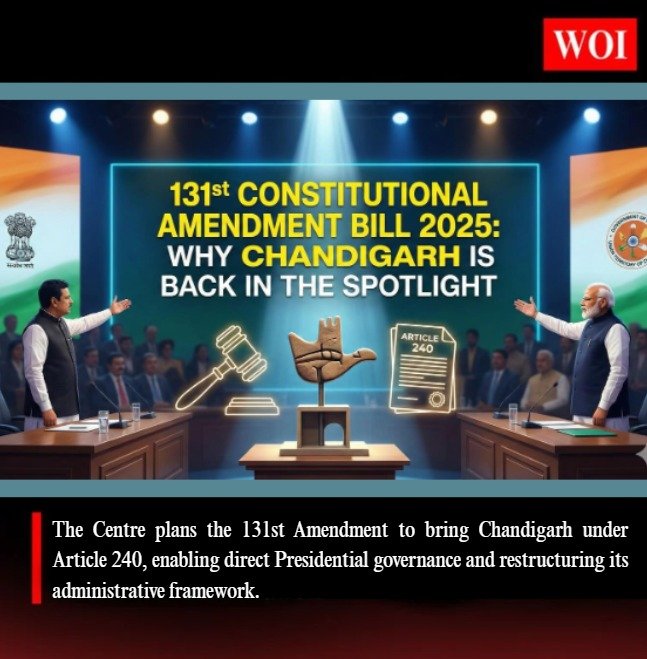
The Government of India is preparing to introduce the Constitution (131st Amendment) Bill, 2025, a move that could significantly change the administrative framework of the Union Territory of Chandigarh. The amendment seeks to bring Chandigarh under Article 240, placing it directly under Presidential regulation similar to other Union Territories without legislatures.
What the Amendment Means
At present, Chandigarh is administered by the Governor of Punjab due to its historical role as the shared capital of Punjab and Haryana. The proposed amendment aims to:
- Include Chandigarh under Article 240, giving the President the authority to issue regulations for its governance.
- Align Chandigarh with UTs like Andaman and Nicobar Islands, Lakshadweep, and Dadra & Nagar Haveli and Daman & Diu.
- Enable the Centre to appoint a separate Administrator or Lieutenant Governor, independent of Punjab’s Governor.
Why Article 240 Matters
Article 240 empowers the President to make regulations for certain Union Territories for their peace, progress, and good governance. Adding Chandigarh to this list strengthens the Centre’s administrative control.
Political and Constitutional Impact
The proposed amendment carries broader implications:
- Federal Sensitivities: Chandigarh’s shared-capital status has long been contested. The move may spark renewed debate between Punjab and Haryana.
- Centralisation Concerns: While the bill could bring administrative clarity, it also raises questions about increasing central oversight over UTs.
- Reorganisation Possibility: Chandigarh’s governance model may permanently shift toward that of a centrally regulated territory.
Key Takeaways
- Major constitutional step involving amendment of Article 240.
- Signals a potential restructuring of Chandigarh’s administrative identity.
- Influences Centre–State relations and the federal balance in India.
The passage of the bill would mark a defining moment in Chandigarh’s governance history, reshaping its administrative and political landscape.
