
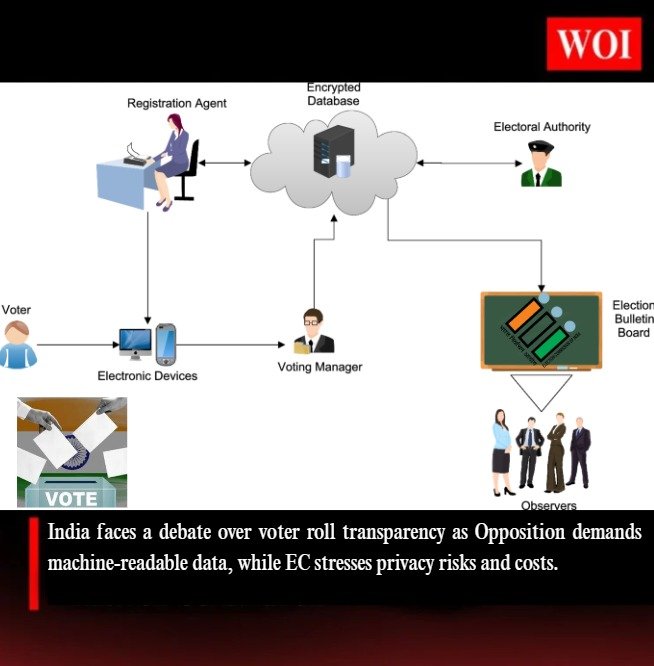
The debate over voter roll transparency in India has sharpened in 2025, with the Opposition demanding machine-readable electoral rolls instead of image-based PDFs. The demand follows rising concerns over vote theft, duplicates, and irregular entries in voter lists.
Current System & Its Limits
The Election Commission (EC) publishes rolls as image PDFs, which are hard to search and analyse across India’s 990+ million voters. Detecting duplicates requires manual effort, making large-scale scrutiny nearly impossible.
Why Machine-Readable Rolls?
Text-based rolls would allow automated checks, enabling political parties and activists to detect fraud and errors more efficiently. Past activists used such data to expose irregularities before 2018.
EC’s Privacy Concerns
In 2018, the EC withdrew machine-readable rolls, citing risks of misuse of voter names and addresses. The Supreme Court upheld this, stressing privacy concerns, though it permitted manual PDF-to-text conversion.
Challenges & Costs
Bulk conversion of voter rolls via OCR is expensive and complex, with costs estimated at $40,000 per revision list. This adds to EC’s hesitation.
The Core Dilemma
The issue reflects a transparency vs privacy conflict. Supporters say machine-readable data boosts accountability, while critics warn of privacy breaches. The challenge lies in balancing electoral integrity with data protection in the world’s largest democracy.
