
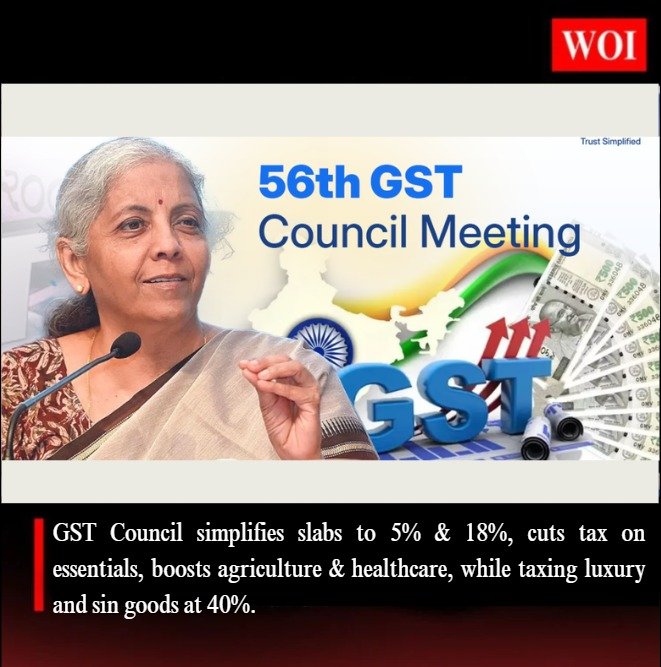
The 56th GST Council meeting, chaired by Union Finance Minister Nirmala Sitharaman on 3rd September 2025 in New Delhi, introduced one of the biggest tax reforms since GST was launched in 2017. The focus was on easing the burden on households, simplifying business compliance, and improving revenue collection.
Key Highlights
- Two-Tier GST Structure: The 12% and 28% slabs were removed, leaving only 5% and 18%. A new 40% slab was created for sin and luxury goods like tobacco, aerated drinks, luxury cars, yachts, and online gaming.
- Relief for Households: Essentials like soaps, shampoos, toothpaste, dairy products, utensils, diapers, and sewing machines moved to the 5% slab, reducing costs for families.
- Support to Farmers: Tractors, tyres, pesticides, bio-nutrients, and irrigation equipment were cut to 5%, lowering agricultural expenses.
- Healthcare Boost: Life and health insurance made GST-exempt. Life-saving drugs, medical kits, and specialised medicines moved to 0–5% GST, making healthcare more affordable.
- Automobiles & Electronics: Small cars, hybrids, motorcycles (up to 350cc), three-wheelers, and trucks shifted to 18% GST (down from 28%). Appliances like ACs, TVs, and dishwashers also moved to 18%.
- Luxury & Sin Goods: Pan masala, cigarettes, alcohol substitutes, betting, casinos, and luxury vehicles will now attract 40% GST.
- Rate Hikes: Coal, lignite, peat, paperboards, and textiles above ₹2,500 shifted to 18%, ensuring higher revenue.
- Compliance Simplification: Faster GST registration within 3 days for low-risk businesses, 90% provisional refunds, and easier export refunds.
- Legal Reforms: GST Appellate Tribunal to be operational by end-2025 with strict timelines for appeals.
The reforms mark a historic restructuring of GST, making essentials cheaper, supporting farmers and healthcare, while shifting the burden to luxury and sin goods. At the same time, simplified compliance is set to benefit businesses, boosting ease of doing business in India.
