
Recent debates around the term “Brahmins” have highlighted confusion between its meaning in India and the United States. A US political controversy linked Indian Brahmins with profiteering, drawing criticism and renewed attention to the concept of the Boston Brahmins.
Who Were the Boston Brahmins?
Coined by Oliver Wendell Holmes in 1861, the term referred to Boston’s wealthy, educated Protestant elite of the 1800s and early 1900s. Descended mainly from English colonisers, they gained influence through trade, education, and strategic marriages.
Culture and Influence
Boston Brahmins valued education, arts, and culture—founding institutions like Harvard and elite preparatory schools. They lived aristocratic lifestyles, married within their circle, and maintained exclusivity. Politically, they supported abolition but resisted immigrant and minority inclusion, shaping Boston’s social divisions.
Notable Members
Figures like Presidents John Adams, John Quincy Adams, Franklin D. Roosevelt, and poet T.S. Eliot came from this group. Their legacy endures in American education, politics, and culture.
Comparison with Indian Brahmins
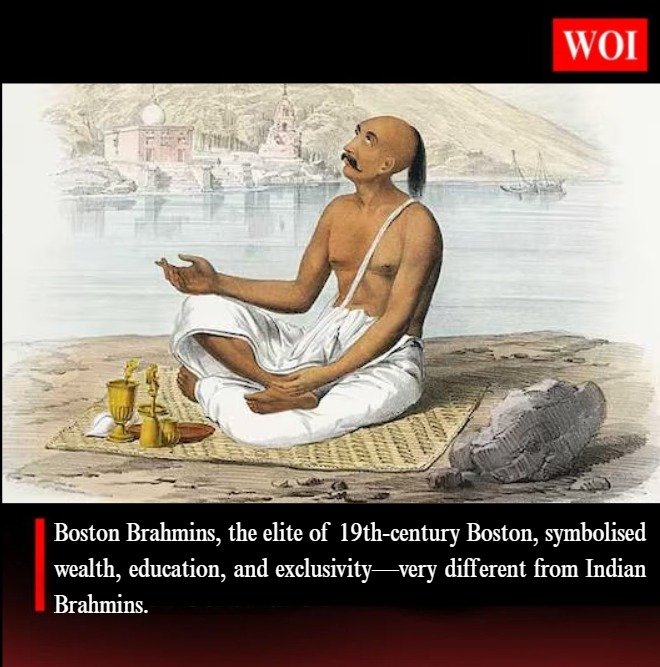
While Indian Brahmins are traditionally a priestly caste with religious authority, Boston Brahmins symbolised a cultural and social elite. The term in the US is metaphorical, not caste-based.
Relevance Today
The Boston Brahmins showcase how elites use culture and networks to preserve power. Their story underlines the importance of context and cultural sensitivity in understanding such terms globally.
