
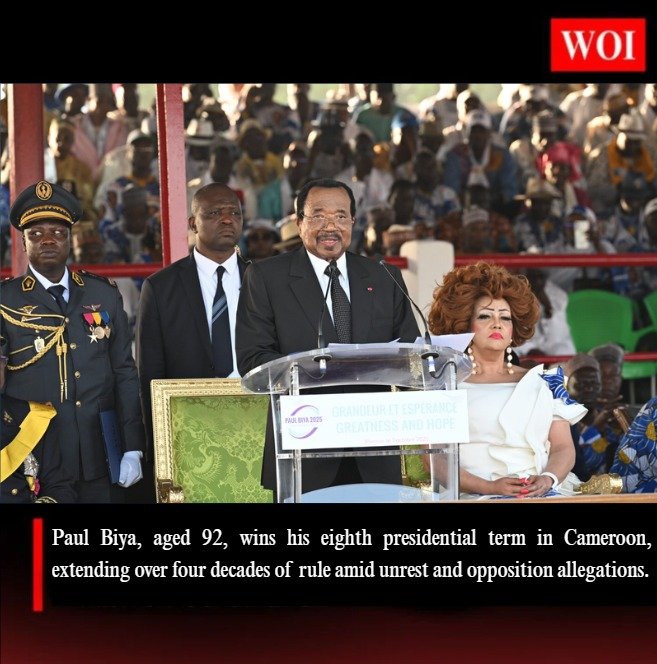
Paul Biya, 92, Wins Eighth Term as Cameroon’s President
Paul Biya, aged 92, has secured another term as President of Cameroon, extending his rule into a fifth decade and cementing his position as the world’s oldest sitting head of state. The country’s Constitutional Council declared Biya the winner of the October 12, 2025 election, marking the start of his eighth consecutive term amid allegations of electoral irregularities and mounting social unrest.
Election Results and Tensions
Biya won 53.66% of the vote, defeating opposition leader Issa Tchiroma Bakary, who secured 35.19%. Voter turnout stood at 57.7%. The election, conducted under heavy security, followed weeks of violent protests that left at least four people dead. Opposition groups have rejected the results, alleging manipulation and demanding an independent audit.
Africa’s Longest-Serving Leader
In power since 1982, Biya has now ruled Cameroon for over 43 years. Constitutional changes over the decades have removed term limits, allowing his continued hold on power. While his leadership has brought periods of stability, critics argue it has also stifled democratic progress in a country where over 70% of citizens are under 35.
Unrest and Opposition Response
Opposition leader Bakary accused security forces of using live ammunition against demonstrators, particularly in his hometown of Garoua. Videos of street clashes circulated widely on social media, fuelling public anger. The ruling party dismissed the claims, insisting that the election was “free and fair.”
Exam-Oriented Facts
- Paul Biya (92) is the world’s oldest president (2025).
- Has ruled Cameroon since 1982 — eighth consecutive term.
- Vote share: Biya 53.66%, Bakary 35.19%.
- 7% voter turnout; over 70% of population under 35.
Political Outlook
Biya’s renewed mandate underscores the generational divide shaping Cameroon’s future. Analysts warn that continued political stagnation, economic strain, and Anglophone separatist unrest could deepen instability. As Biya enters his fifth decade in power, questions grow louder about succession, reform, and the voice of Cameroon’s youth in shaping the nation’s next chapter.
