
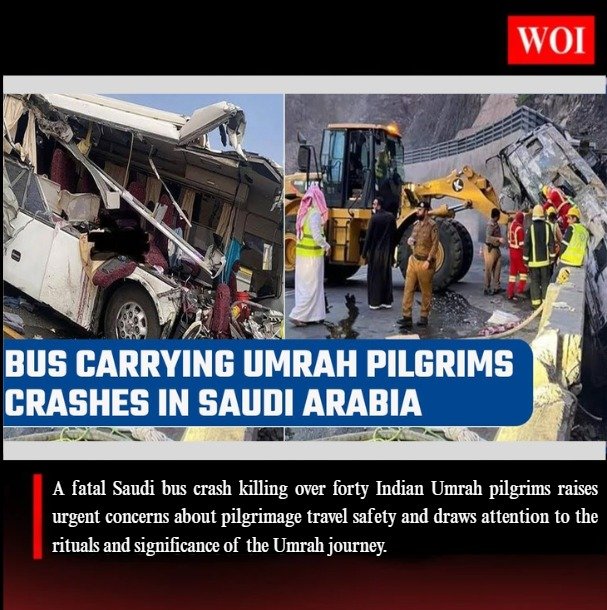
A tragic accident in Saudi Arabia has cast a shadow over the sacred journey of Umrah, after a bus carrying Indian pilgrims—many from Hyderabad—collided with a diesel tanker, killing more than forty people. The pre-dawn crash triggered a fire while most passengers were asleep, making rescue efforts extremely difficult.
Indian consular officials in Jeddah immediately activated emergency helplines and set up a 24/7 control room to support affected families and coordinate with local authorities.
Umrah, known as the “minor pilgrimage,” is a voluntary spiritual journey to Mecca, performed any time of the year. Pilgrims enter the state of Ihram, perform Tawaf around the Ka’aba, walk between Safa and Marwa in Sa’i, and conclude with halq or taqsir as a symbol of renewal and humility. The pilgrimage holds deep significance, with many believing it brings forgiveness and spiritual cleansing.
The incident has also revived conversations about transport safety for pilgrims travelling between Mecca and Medina—one of the busiest religious corridors in the world.
- Umrah is voluntary; Haj is mandatory for eligible Muslims.
- Haj occurs during Dhul-Hijjah; Umrah can be performed year-round.
- Umrah rituals: Ihram, Tawaf, Sa’i, halq/taqsir.
- Umrah lasts hours; Haj spans several days with additional rites.
The tragedy underscores the need for stronger safety protocols during religious travel while reminding the world of the deep devotion that draws millions to these sacred journeys.
