
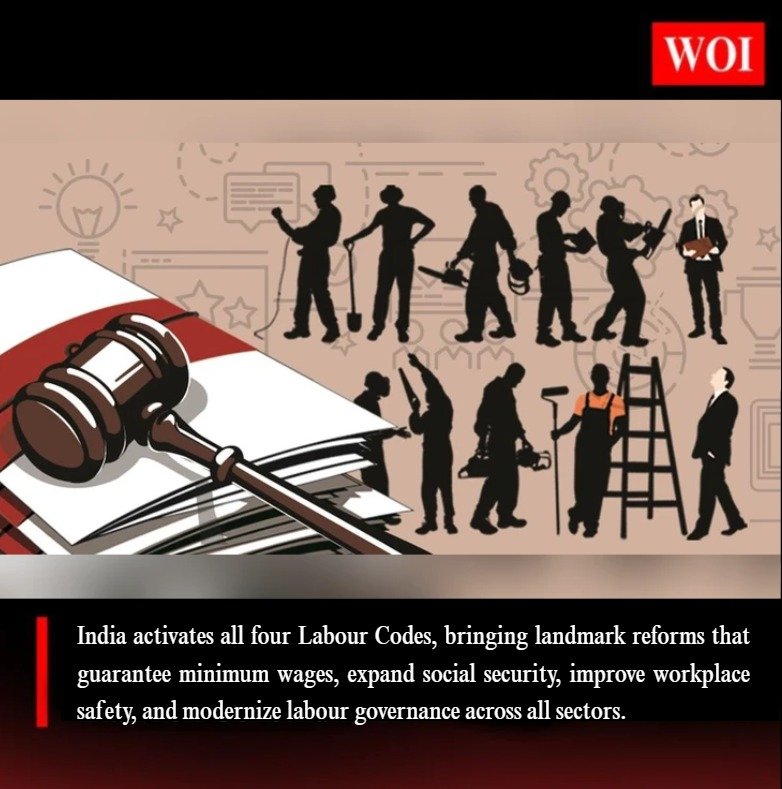
India has entered a new era of labour governance with the Government officially implementing all four Labour Codes on 21 November 2025. This reform—one of the most significant since Independence—merges 29 outdated labour laws into four simplified, modern, and worker-centric Codes aimed at expanding social security, ensuring worker safety, and easing compliance for industries.
The Codes on Wages, Industrial Relations, Social Security, and Occupational Safety & Working Conditions together create a unified framework that benefits organized, unorganized, gig, platform, contract, MSME, migrant, and hazardous-sector workers.
Key transformations include mandatory appointment letters, minimum wages for all, pan-India ESIC coverage, night shift access for women with safety, annual health checkups, and a single license-registration-return system that reduces red tape for employers. Social security has also been widened dramatically, offering PF, pensions, insurance, and portability through Aadhaar-linked accounts.
Workers across sectors—from gig and contract labour to plantation, textile, mining, digital media, dock, and export industries—gain formal protections, better wages, health benefits, and improved workplace safety. Fixed-term employees get gratuity after one year, and youth workers receive guaranteed wages and leave protections.
Experts view the rollout as a major milestone in India’s economic modernization, strengthening both worker welfare and business competitiveness. The reforms are expected to boost employment, productivity, and global investor confidence while supporting the vision of a future-ready, inclusive, and self-reliant India.
