
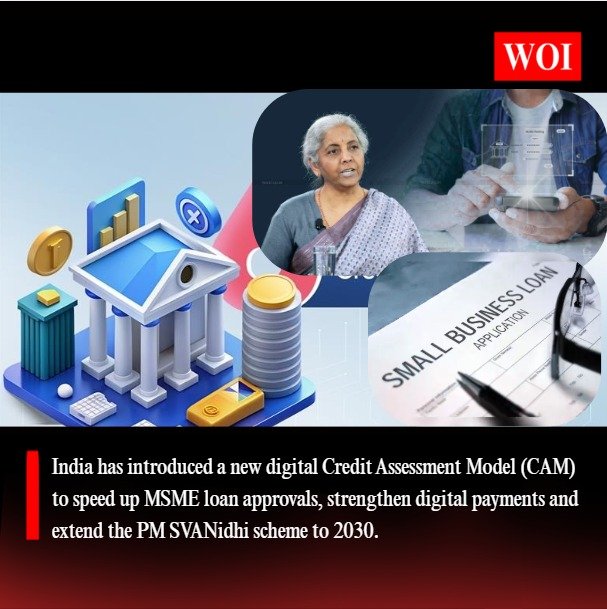
The Government of India has introduced a new Credit Assessment Model (CAM) to modernise and speed up loan processing for Micro, Small and Medium Enterprises (MSMEs). Designed as a digital-first system, CAM uses verified online data to create objective credit profiles, reducing paperwork and improving transparency.
What CAM Does
The model collects financial information from multiple digital sources and uses automated tools to assess an MSME’s eligibility. This cuts down on manual intervention, minimises errors and removes bias, helping banks take faster and fairer lending decisions. Both existing customers and new applicants will benefit from quicker approvals.
Boost to Digital Payments
In parallel, the Government, RBI and NPCI are working to strengthen India’s digital payment ecosystem. Key measures include incentives for RuPay debit card payments, support for small-value BHIM-UPI transactions and the Payments Infrastructure Development Fund (PIDF) to expand POS and QR infrastructure in underserved regions.
PM SVANidhi Extended Till 2030
The popular PM SVANidhi scheme, which offers loans to street vendors, has been extended till March 31, 2030. Vendors can now access loans in three tiers — ₹15,000, ₹25,000 and ₹50,000 — depending on timely repayment. The updated scheme also provides a UPI-enabled RuPay credit card with a ₹30,000 limit along with cashback incentives to promote digital transactions.
A Push Toward Inclusive Finance
Minister of State for Finance Pankaj Chaudhary stated that these reforms will expand credit access, improve digital adoption and empower small businesses. Together, CAM, digital payment initiatives and PM SVANidhi’s expansion aim to build a more inclusive, transparent and technology-driven financial ecosystem for India.
