
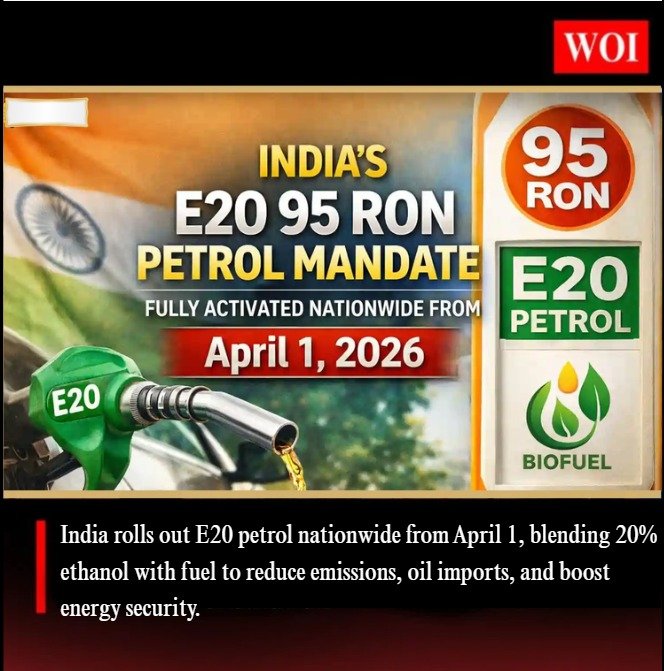
From April 1, India has officially adopted E20 petrol as the standard fuel across the country, marking a major step in its clean energy and sustainable mobility journey. Under directives issued by the Ministry of Petroleum and Natural Gas, fuel stations nationwide are now supplying petrol blended with 20% ethanol, replacing the earlier E10 norm.
What Is E20 Petrol?
E20 petrol is a fuel blend comprising 80% conventional petrol and 20% ethanol, with ethanol derived from agricultural sources such as sugarcane, maize, and other grains. Ethanol has a higher octane rating (around 95 RON), enables cleaner combustion, and helps lower carbon emissions, making E20 a more environment-friendly fuel option.
What Has Changed with the Rollout?
The central government has mandated E20 petrol across all states and Union Territories, directing oil marketing companies to ensure uniform fuel quality as per Bureau of Indian Standards (BIS) norms. This move aligns with India’s long-term ethanol blending programme aimed at reducing dependence on imported crude oil and enhancing energy security.
Impact on Vehicles
- New vehicles: Most modern cars and two-wheelers are E20-compliant and designed to handle higher ethanol blends without performance issues.
- Older vehicles: While E20 can still be used, some older models may experience a slight drop in fuel efficiency or minor changes in engine performance.
Why It Matters
The nationwide rollout of E20 petrol is expected to cut vehicular emissions, reduce oil import bills, support farmers through ethanol production, and strengthen India’s transition towards biofuels and green energy.
Overall, E20 petrol represents a significant policy push towards cleaner fuels, balancing environmental goals with energy security and sustainable growth.
