
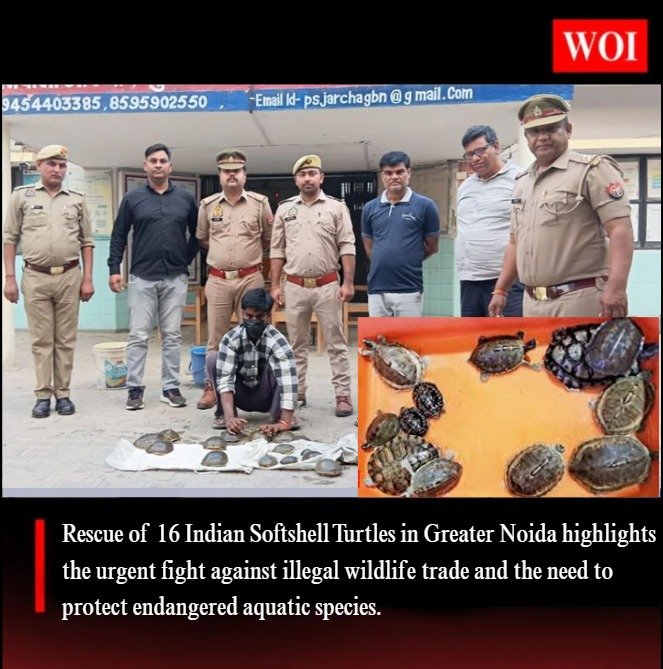
Police in Greater Noida recently rescued 16 Indian Softshell turtles during a routine check, once again highlighting the continuing menace of illegal wildlife trade in India. The rescue has drawn attention to the vulnerability of aquatic species and the urgent need for stronger conservation enforcement.
The Indian Softshell Turtle (Nilssonia gangetica), also known as the Ganges Softshell Turtle, is one of the largest freshwater turtles in the world. It is easily identified by its soft, oval-shaped shell, long neck, and tube-like snout that allows it to breathe while staying submerged. An excellent swimmer, the species inhabits rivers, lakes, ponds, and canals with sandy or muddy beds across South Asia.
In India, the turtle is found in major river systems such as the Ganga, Brahmaputra, Yamuna, Indus, Narmada, and Mahanadi. Omnivorous by nature, it feeds on fish, insects, molluscs, carrion, and aquatic plants, playing an important role in maintaining ecological balance. In some regions like Odisha, the species is revered and protected in temple ponds.
Despite its ecological importance, the Indian Softshell Turtle faces severe threats from habitat loss, river pollution, and illegal poaching for meat and traditional medicine. It is listed as Endangered on the IUCN Red List and is protected under Schedule I of the Wildlife Protection Act, 1972. Incidents like this rescue underline the need for sustained vigilance, public awareness, and strict enforcement to protect India’s threatened aquatic biodiversity.
