
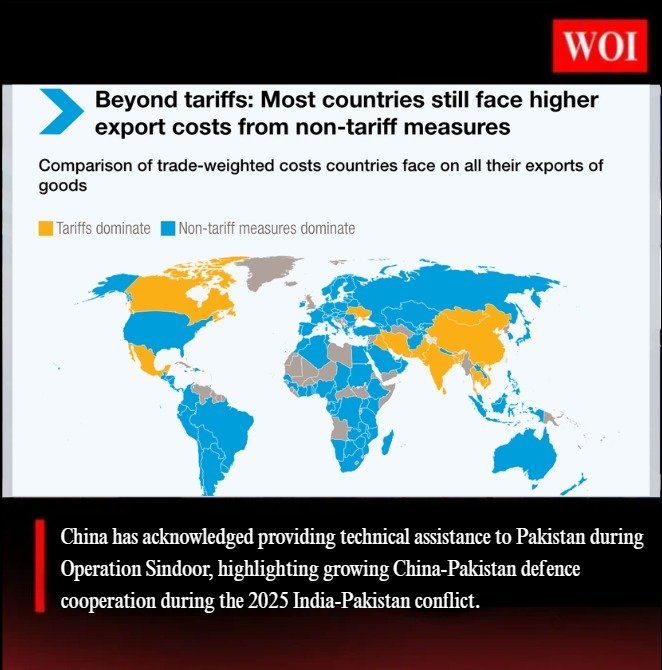
The United Nations Conference on Trade and Development (UNCTAD) has released a report titled Invisible Barriers: The Costs of Non-Tariff Measures, highlighting the growing impact of non-tariff measures (NTMs) on international trade. According to the report, NTMs now impose greater costs on exports than tariffs for nearly 88% of countries worldwide.
Non-tariff measures are trade regulations other than customs duties and include technical standards, sanitary and phytosanitary rules, licensing systems, and product compliance requirements. While these measures are often introduced for safety, quality, or environmental reasons, they also create additional compliance costs for exporters.
The report states that developing and least-developed countries are the most affected because many exporters struggle to meet technical and administrative standards in major markets. UNCTAD estimates that least-developed countries lose nearly 10% of their exports to G20 economies due to difficulties in complying with these requirements.
Despite rising global tariffs in 2025, non-tariff measures remained the dominant trade cost for most economies. The report links the increase in interventionist trade policies to disruptions caused by the COVID-19 pandemic, the Russia-Ukraine conflict, and tariff hikes introduced by the United States in 2025.
UNCTAD also highlighted that improving transparency in non-tariff regulations could reduce related trade costs by about 19%. Greater regulatory cooperation under regional agreements such as the African Continental Free Trade Area (AfCFTA) could further lower compliance costs for agriculture and manufacturing sectors.
The report underlines the need for balanced trade policies that protect consumers while ensuring fair market access for developing economies in the global trading system.
