
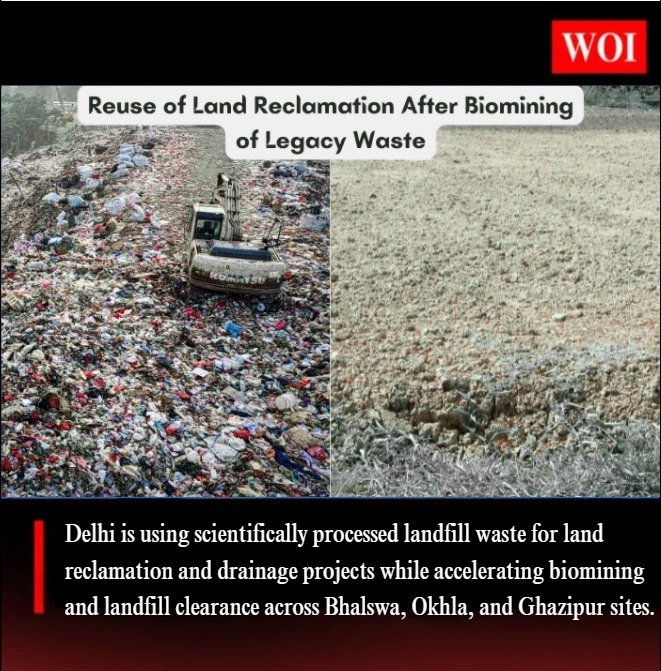
Delhi has started using processed legacy waste from the Bhalswa landfill to fill low-lying and waterlogged areas in Roop Vihar and Sharma Colony in North-West Delhi. The initiative is part of the city’s broader landfill remediation and drainage management strategy aimed at improving urban infrastructure and reclaiming land from old garbage dumps.
Legacy waste refers to municipal solid waste that has accumulated at landfill sites over many years. To manage this waste, Delhi authorities are using biomining, a scientific process that separates and processes old waste for reuse, recycling, or safe disposal. As of May 2026, Delhi was processing nearly 25,000 to 30,000 metric tonnes of waste every day.
Delhi’s three major landfill sites are located at Bhalswa, Okhla, and Ghazipur. The Municipal Corporation of Delhi has set targets to clear the Okhla and Bhalswa landfills by 2026 and the Ghazipur landfill by 2027. By May 2026, around 195 lakh metric tonnes of waste had been removed, helping reclaim nearly 75 acres of land.
The reclaimed land is expected to support public welfare projects such as hospitals, schools, and sports complexes. In addition, Delhi introduced a Drainage Master Plan in September 2025 with an estimated cost of over ₹57,000 crore to improve the city’s drainage system over the next 30 years.
The initiative highlights how scientific waste management and landfill remediation can support urban development, reduce environmental risks, and improve public infrastructure in the National Capital Territory of Delhi.
