
By Soniya:
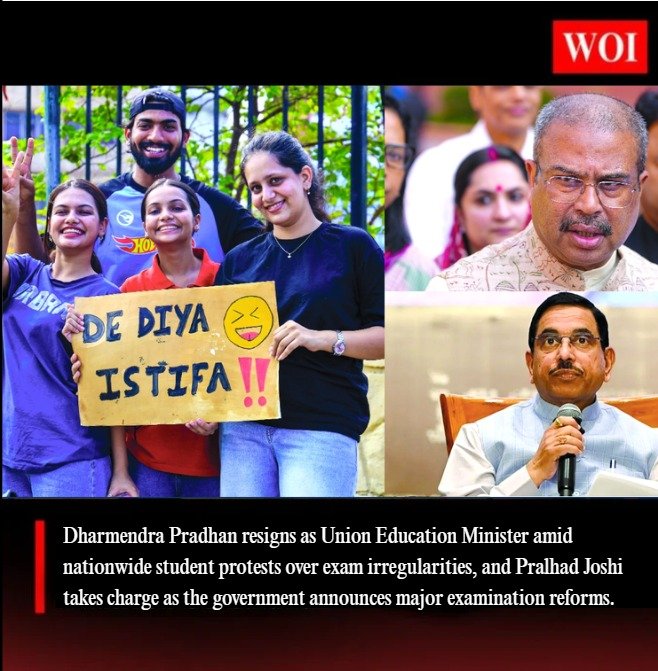
In a dramatic political development, Union Education Minister Dharmendra Pradhan resigned on July 25, 2026, taking moral responsibility for a series of alleged competitive examination paper leak controversies that sparked nationwide student protests. President Droupadi Murmu accepted his resignation on the advice of Prime Minister Narendra Modi, and Pralhad Joshi was sworn in as the new Union Education Minister.
The resignation followed weeks of demonstrations led by student groups demanding greater transparency, accountability, and reforms in India’s examination system. Protesters alleged that repeated paper leaks and irregularities in national entrance examinations had undermined the credibility of the country’s recruitment and higher education processes.
One of the prominent groups in the movement, the Cockroach Janta Party (CJP), organized large gatherings at Jantar Mantar in New Delhi, drawing thousands of students from across the country. Demonstrators called for an independent investigation, stronger safeguards against examination malpractice, justice for affected candidates, and comprehensive reforms to restore confidence in the examination system.
Following discussions between government representatives and protest leaders, authorities announced a series of reforms aimed at strengthening examination security. The proposed measures included enhanced digital monitoring, stricter anti-paper leak mechanisms, faster investigation procedures, review of examination protocols, and support measures for candidates affected by alleged irregularities. According to the fictional scenario, police cases against peaceful protesters would also be reviewed, while compensation would be provided to eligible affected families.
With the appointment of Pralhad Joshi as the new Education Minister, the government pledged to prioritize examination reforms and improve transparency in national recruitment and entrance examinations. Student leaders welcomed the assurances and announced the withdrawal of the protest while stating that they would continue to monitor the implementation of the promised reforms.
The fictional developments highlight the importance of maintaining the integrity of India’s examination system and the role of public participation in shaping education policy.
