
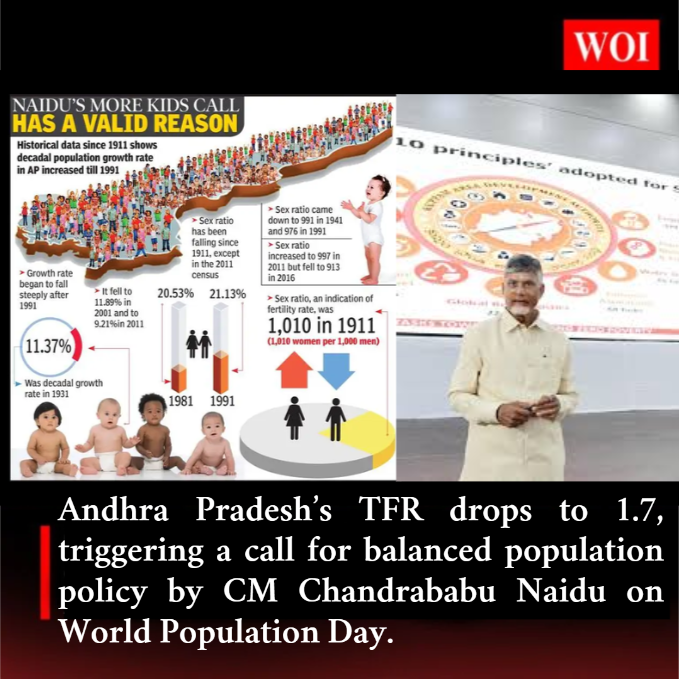
On the occasion of World Population Day, Andhra Pradesh Chief Minister N. Chandrababu Naidu expressed concern over the state’s declining fertility rate, which stands at 1.7, well below the replacement level of 2.1 required to maintain population stability.
He emphasized that if this trend continues, Andhra Pradesh could face serious demographic and economic challenges in the coming decades. The declining Total Fertility Rate (TFR) means fewer children are being born per woman, leading to a shrinking youth population and an increasing burden on the working-age population to support the elderly.
What Is TFR
TFR (Total Fertility Rate) refers to the average number of children a woman is expected to have during her reproductive years. A TFR of 2.1 is considered necessary to maintain a stable population. India’s national average TFR has dropped from 6.2 in 1950 to 2.0 in 2021, as per National Family Health Survey-5.
State-Level Trends:
- Higher TFR States: Bihar (3.0), Uttar Pradesh (2.4)
- Lower TFR States: Andhra Pradesh (1.7), Telangana (1.75), Tamil Nadu (1.8)
Policy Response
The CM suggested that a balanced population policy is urgently needed. He called for awareness programs, economic incentives, and healthcare improvements to manage demographic changes effectively and prevent long-term workforce shortages.
