
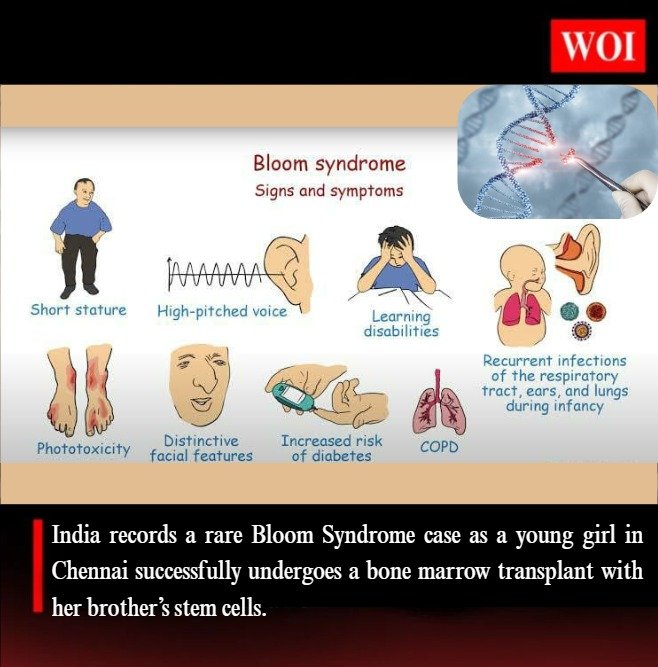
A 12-year-old girl diagnosed with Bloom Syndrome recently underwent a successful bone marrow transplant at a private hospital in Chennai, with stem cells donated by her younger brother. This marks a significant step in managing the rare condition, which poses severe health challenges from an early age.
What is Bloom Syndrome?
Bloom Syndrome (also called Bloom-Torre-Machacek syndrome or congenital telangiectatic erythema) is a rare genetic disorder caused by mutations in the BLM gene. This gene plays a vital role in repairing damaged DNA. When defective, it leads to abnormal cell growth, making patients more prone to infections, sun sensitivity, and certain cancers.
How Does It Occur?
- Inherited in an autosomal recessive pattern.
- Occurs if a child inherits two defective BLM gene variants (one from each parent).
- Seen more commonly in the Ashkenazi Jewish population.
Key Symptoms
- Poor growth before and after birth; smaller height and head size.
- Distinct facial features: narrow face, prominent nose/ears, long limbs.
- Skin rashes after sun exposure.
- High risk of infections (ear, lung, COPD).
- Insulin resistance leading to diabetes.
- Infertility in adults.
- Significantly higher risk of cancer at an early age.
Treatment & Care
There is currently no cure for Bloom Syndrome. Treatment is symptom-focused, requiring a multi-disciplinary approach to manage infections, diabetes, and cancer risks. The bone marrow transplant in Chennai highlights how modern medicine is exploring advanced ways to support patients with this rare condition.
