
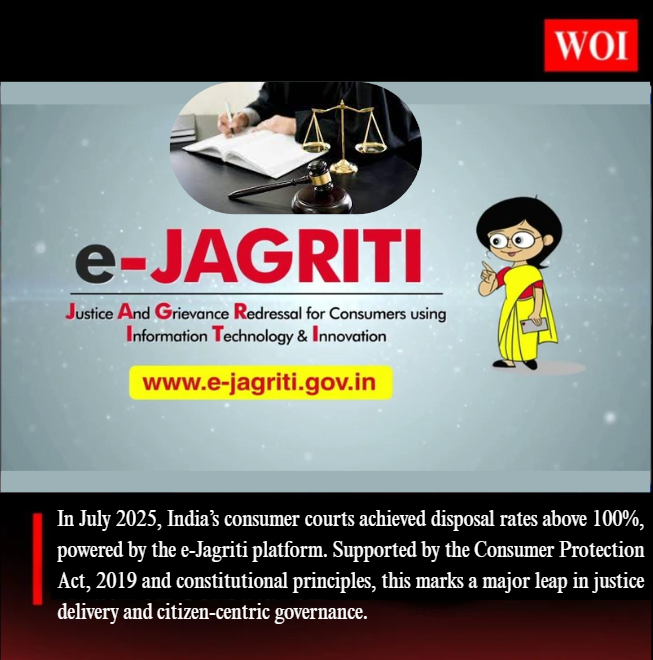
In July 2025, India’s consumer grievance redressal system achieved a landmark success. Ten States and the National Consumer Disputes Redressal Commission (NCDRC) reported disposal rates exceeding 100%, meaning they resolved more cases than were filed.
Key July 2025 Disposal Highlights
- NCDRC: 122%
- Tamil Nadu: 277%
- Rajasthan: 214%
- Telangana: 158%
- Himachal Pradesh & Uttarakhand: 150% each
- Kerala: 122%, Puducherry: 111%, Chhattisgarh: 108%, Uttar Pradesh: 101%
This represents a significant leap from July 2024, strengthening consumer justice delivery across India.
e-Jagriti: Digital Transformation
Launched on 1 January 2025, e-Jagriti unified older systems (OCMS, e-Daakhil, NCDRC CMS, CONFONET) into a seamless digital platform.
Key Features:
- Online/offline complaint filing with OTP-based registration
- Virtual hearings, multilingual and voice-to-text support
- Real-time case tracking, AI chatbots, and secure dashboards
- Judge-friendly smart calendars and full workflow digitization
As of August 2025, 2+ lakh users (including NRIs) registered and 85,531 grievances filed through the platform.
Polity & Constitutional Context
- Consumer Protection Act, 2019 – provides for dispute redressal commissions (District, State, National levels).
- Article 38 – directs the State to secure social justice and minimize inequalities.
- Article 39A – ensures equal justice and free legal aid.
- Article 323B – empowers Parliament/State Legislatures to set up tribunals, including for consumer disputes.
- NCDRC (quasi-judicial body) upholds consumer rights under the framework of Article 14 (Equality) and Article 21 (Right to Life with dignity).
Outlook
With record disposal rates and digital-first innovations, India’s consumer redressal system is setting new benchmarks in justice delivery, aligning constitutional directives with modern governance.
