
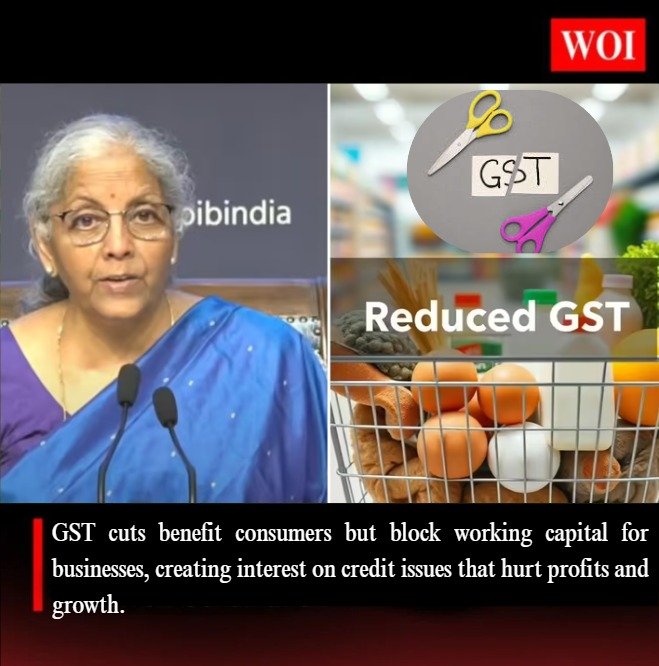
The Goods and Services Tax (GST) is a cornerstone of India’s indirect tax system. While a GST rate cut lowers prices for consumers, it often creates hidden challenges for businesses—most notably the “interest on credit” issue.
What Is Interest on Credit?
When companies face delays in getting tax refunds, their funds remain blocked. To keep operations running, they borrow money from banks or financial institutions. The interest paid on such loans is called interest on credit, which adds to their financial burden.
Why GST Cuts Create This Issue
- Mismatch in ITC – Businesses pay higher GST on inputs, but after a rate cut, they collect less GST on sales, leaving excess Input Tax Credit (ITC).
- Blocked Working Capital – Extra ITC remains stuck with the government due to slow refund processes.
- Borrowing Costs – Companies borrow to cover expenses, paying interest while refunds are delayed.
- Profit Pressure – Reduced prices help consumers, but higher financial stress cuts into business margins.
Example
- Inputs worth ₹1,00,000 → GST paid @18% = ₹18,000
- GST rate on output reduced to 12% → GST collected = ₹12,000
- Excess ITC = ₹6,000 (blocked until refund).
- To manage expenses, the firm borrows and pays interest → interest on credit issue.
Why It Matters
- Businesses: Higher financial burden and squeezed profits
- Consumers: Price reductions may be limited
- Economy: Frequent GST cuts without faster refunds discourage investment and strain growth
In short: GST cuts may look consumer-friendly but can quietly hurt businesses by locking up working capital and increasing borrowing costs.
