
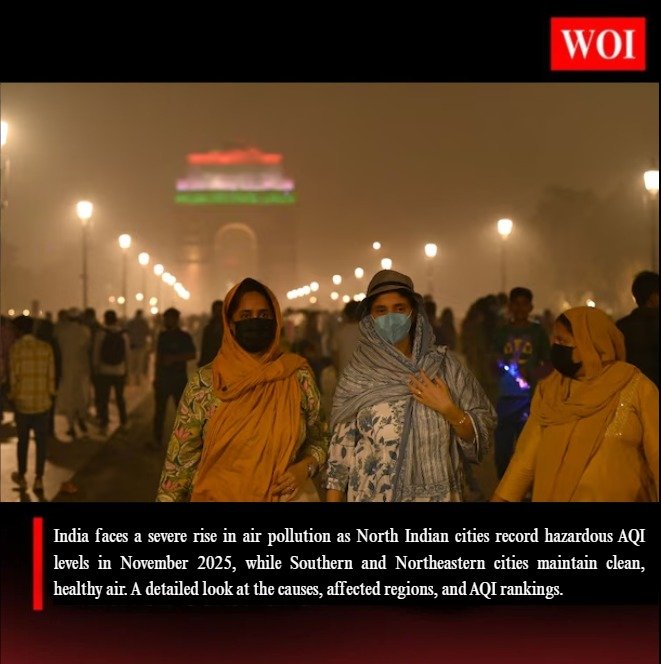
As winter sets in, India is once again grappling with extreme air pollution, especially across North India. A combination of low wind speeds, falling temperatures, and increased emissions has pushed several cities into the ‘very poor’ and ‘severe’ air quality categories. According to the CPCB and IQAir’s Live AQI⁺ Rankings (November 25, 2025), New Delhi remains the world’s most polluted capital.
North India Leads the Worst AQI Rankings
Hapur recorded the highest AQI in the country at 416 (‘Severe’), followed by Noida, Ghaziabad, and Delhi—all registering dangerously unhealthy PM2.5 and PM10 levels. Cities across Uttar Pradesh and Haryana dominate the top 10 most polluted list.
Delhi’s AQI stood at a hazardous 382, triggering strict actions under the Graded Response Action Plan (GRAP), including construction bans, traffic restrictions, and intensified anti-smog operations.
South and Northeast Shine With Clean Air
In contrast, Southern and Northeastern cities report exceptional air quality. Tamil Nadu leads with eight cities in the top ten cleanest list, with Ariyalur topping the chart at an AQI of just 13. Cities like Ooty, Karur, Salem, and Shillong continue to maintain “Good” air quality due to favorable climate, strong pollution controls, and lower industrial emissions.
Why the North Struggles
Key factors worsening pollution in North India include:
- Crop residue burning
- Vehicular emissions from dense urban populations
- Industrial smoke and construction dust
- Temperature inversion during winter
- Firecracker pollution during festivals
Why the South Performs Better
Cleaner southern and northeastern cities benefit from:
- Lower population density
- Stricter environmental regulations
- Greater green cover
- Less fossil fuel usage
- Supportive geographical conditions
India’s contrasting AQI landscapes highlight an urgent need for long-term pollution control strategies, sustainable urban planning, and coordinated policy action across states.
