

Naivedyam Before Rice: Telangana’s Lost Millet Traditions
By Rupasri Pattanayak
What festival is this? Varlakshmi Vratam. Today we’re making payasam with rice instead of vermicelli. At the temple, the prasadam is daddo janam, the annadanam menu features pullihora, and this evening we’ll enjoy sarvapindi and sakinalu with tea. All these dishes, so central to Telangana cuisine, share one key ingredient, rice. But have you ever wondered when rice became the staple of this region? What was offered as naivedyam to the gods before rice took over? This article explores that fascinating history.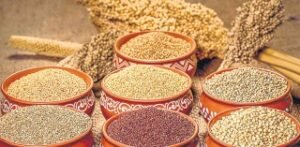 Before the dominance of rice, millets formed the backbone of Telangana’s diet. With the expansion of irrigation projects across the Deccan plateau, rice gradually replaced millets in both ritual and daily meals. The most important millets once cultivated and consumed in the region were Sajja (Bajra/Pearl millet), Jonna (Jowar/Sorghum), Korralu (Foxtail millet), Samalu (Little millet), and Variga/Arikelu (Kodo/Proso millet). People of Telangana prepared a variety of wholesome dishes from these grains, such as Rotte (thick flatbreads), Ambali (fermented porridge), Mudde (balls), and Sangati (steamed dough balls). Today, these traditional foods are often regarded either as “poor man’s food” or as occasional delicacies enjoyed at home or in specialty restaurants.
Rice, once a luxury grain in Telangana grown only in fertile lands near riverbanks, gained prominence over time. During the Kakatiya dynasty (12th–14th century), large-scale irrigation works, such as the famous Kakatiya tanks were introduced, later under the Nizam’s canal systems, and even more dramatically after the Green Revolution, rice production surged. This ultimately transformed rice into the staple household grain, displacing millets from their central place in Telangana’s food culture.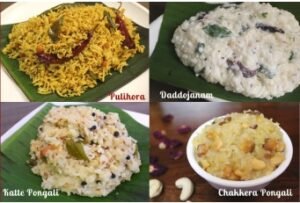 It is often said that if you want to understand the food culture of a region, you should begin by tasting the prasadam offered at its temples. For instance, a visit to Puri Jagannath Temple reveals the essence of Odia cuisine, while the offerings at Tirumala Balaji Temple reflect the dietary traditions of AP and Telangana. Temple rituals and prasadam in Telangana tend to adopt what are considered “prestige foods”, with rice long being regarded as white, pure, auspicious, and versatile, easily prepared as curd rice, payasam, or pullihora. A striking example is seen during the festival of Bonalu, where the central offering (Bonam) is rice cooked with milk and jaggery, one of the most widely practiced rituals in the region.
Before the advent of rice, festival offerings in Telangana were deeply rooted in millet traditions. People would present Naivedyam to their Gramadevis in the form of sajja rotte with jaggery or sesame, jonna rotte smeared with ghee, korralu or samalu payasam, & ambali made with sajja. These dishes reflected both the agricultural landscape and the cultural practices of the region. Even today, Telangana’s food culture retains older layers of millet-based traditions. In the Zaheerabad region, known as the millet belt, freshly cut millet leaves and panicles are offered during local rituals and even hung on doorways, a practice documented in the DDS Equator Initiative case study. During Bathukamma, the naivedyam (sattu) prepared over nine days features a rich mixture of sorghum (jonna), pearl millet (sajja), maize, pulses, sesame, peanuts, jaggery, and milk with rice included. 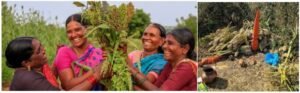 Among the Gonds of Northern Telangana, offerings of jowar panicles during agrarian rituals stand as living testimony to the role of millets in sacred practices, reflecting an older mixed-grain ritual pantry. Everyday traditions echo this history too. Ambali, a cooling, fermented porridge made of jowar or ragi, consumed with curd and chutney, was once the staple food of field workers and continues to be a common food in districts such as Adilabad.
 In 2023, TDP leader N. Chandrababu Naidu stirred debate when he remarked that the people of Telangana traditionally ate jonnalu (sorghum), raghulu (finger millet), and sajjalu (pearl millet) until the Telugu Desam Party came to power. According to him, rice only became a staple food after the former Chief Minister N. T. Rama Rao introduced the ₹2kg rice scheme, which he described as the foundation for food security in the country. His comments, however, drew criticism, with many leaders demanding a public apology. Yet, regardless of the political controversy, the statement indirectly underscores a historical truth: millets, not rice, were once the staple foods of Telangana.
 The Government of India declared 2018 as the National Year of Millets, with the aim of reviving these traditional grains, enhancing their visibility, and promoting them as climate-resilient and nutritious alternatives to major cereals. Building on this momentum, during the 75th session of the United Nations General Assembly (UNGA) in March 2021, India successfully proposed a resolution to declare 2023 as the International Year of Millets. This global recognition has further boosted the revival of millet consumption across the world. Traditional millet dishes have been reimagined for modern tastes, the humble rotte now appears as cookies, while mudde has inspired millet-based cakes, among other innovations.
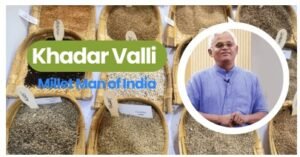 In Telangana and AP, several prominent individuals have played a vital role in reviving the heritage of millets and bringing their value to both the region and the world. Dr. Khadar Vali, widely celebrated as the “Millet Man of India,” is best known for his decades-long advocacy of millet consumption for health, sustainability, and disease prevention. In recognition of his impactful work, he was awarded the Padma Shri in 2023. Another champion of millets, P. V. Satheesh, a prominent farmer and director of the Deccan Development Society in Telangana. He is celebrated for his pioneering initiatives in promoting millet cultivation and empowering rural women.
Temples too have embraced this revival. Recently, millet-based naivedyams have been introduced at the Kashi Vishwanath Temple (Varanasi, UP), Yadadri Sri Lakshmi Narasimha Swamy Temple (Yadagirigutta), Balkampet Yellamma Temple (Hyderabad), Mahankali Temple (Secunderabad), and Basara Saraswati Temple (Adilabad). These offerings symbolize not only nourishment for the body but also a reminder that millets are earth-friendly grains. The larger goal, however, should be to restore millets as household grains across Telangana and India, bringing them back to their past glory as staples of both daily diets and cultural rituals.
