
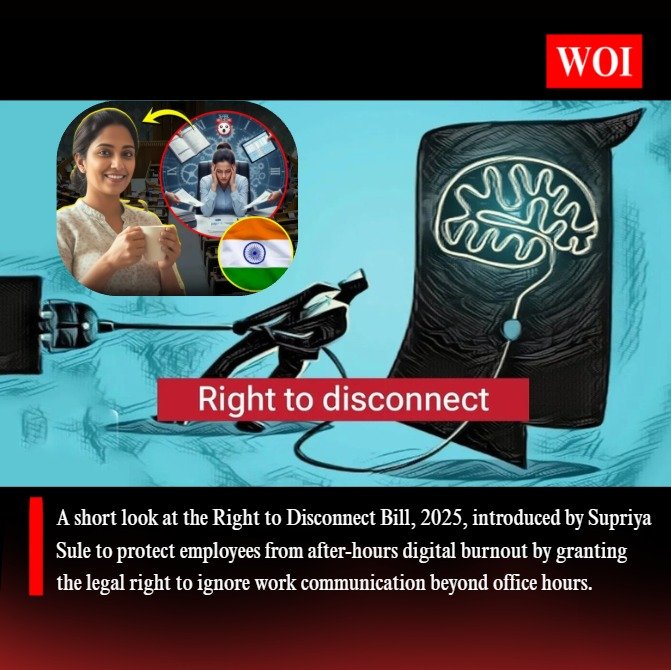
NCP MP Supriya Sule has introduced the Right to Disconnect Bill, 2025 in the Lok Sabha, proposing legal safeguards for employees against after-hours work communication. The move seeks to counter the rising impact of digital burnout, especially in an era of remote work where constant connectivity has blurred work–life boundaries.
The bill grants employees the legal right to refuse work-related calls, emails, texts, or video meetings outside office hours or on holidays without the fear of disciplinary action. It applies across all sectors and covers all forms of official communication.
Under the proposal, companies can face penalties amounting to 1% of the employee’s total remuneration if they violate these provisions. However, the framework allows flexibility for genuine emergencies, where employers and employees may mutually agree on specific terms of communication. Work done voluntarily after hours may be compensated at normal overtime rates.
The bill highlights rising issues such as telepressure, emotional exhaustion, sleep deprivation, and digital overload, arguing that India’s long work hours—among the highest globally—make such reform necessary. This is a renewed attempt after a similar 2019 bill, reflecting increased urgency following the pandemic-driven shift to digital workplaces.
Globally, countries including France, Italy, and the Philippines have implemented similar laws, making India’s proposal part of a wider movement prioritizing employee mental health and personal time.
The Right to Disconnect Bill represents a significant step toward restoring work–life balance and curbing the “always available” culture that has become prevalent in the digital era.
