
By Rupasri
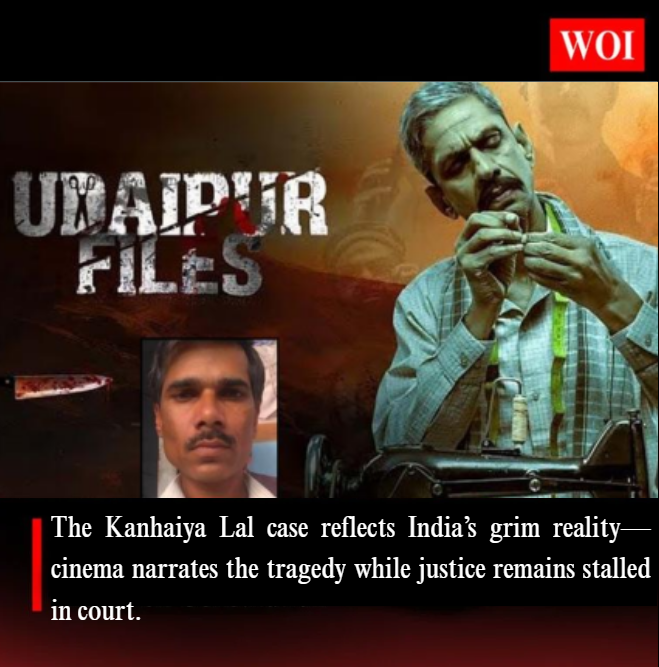
In India, the grim irony of delayed justice is starkly highlighted by the Kanhaiya Lal case: a brutal murder that has already inspired a feature film, yet the judicial verdict remains elusive. Lal, a tailor from Udaipur, was viciously beheaded inside his shop in June 2022 in a premeditated attack that shocked the nation and underscored the growing threat of extremist violence.
The Tragic Crime: Murder on Camera
The attack was meticulously planned. The perpetrators, motivated by ideological extremism, entered Lal’s shop and killed him in front of the camera, livestreaming parts of the attack to intimidate and spread terror. This act was widely condemned as a deliberate attempt to instil fear and polarize communities. Two primary convicts have been identified:
• Mohammad Riyaz Attari: One of the main accused, arrested shortly after the incident.
• Mohammad Ghouse Mohammad: The second primary accused, also arrested in connection with the murder.
The investigation revealed that the assailants had recorded and shared the video on social media to amplify the psychological impact and broadcast their extremist agenda, turning a personal tragedy into a public spectacle of terror.
Cinema Ahead: Udaipur Files Screening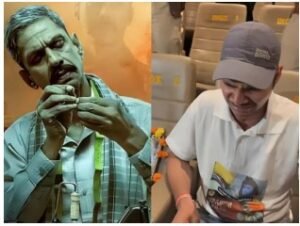 The personal toll of Lal’s murder was painfully visible during the screening of Udaipur Files, a film dramatizing the harrowing events. His sons, visibly emotional, revealed the profound and enduring impact of the tragedy on their family. While cinema quickly captured and presented the story to audiences nationwide, the judicial process has lagged far behind; a grim irony that underscores systemic inefficiencies.
Judicial Delays: A Trial in Limbo The trial is being conducted in a special National Investigation Agency (NIA) court in Jaipur. Yet, more than three years after the murder, progress has been painfully slow. Out of 166 witnesses, only six have been examined as of mid – 2025. Analysts cite administrative gaps, including a two-month vacancy in the special court’s judgeship, as a key factor behind the delay.
In July 2025, Pravendra Pal Singh was appointed as the judge for the special NIA court. While his appointment has raised hopes for more consistent trial proceedings, over 160 witnesses still await examination, leaving the final verdict far from reach.
Controversial Legal Interventions: Jamiat Ulama -i-Hind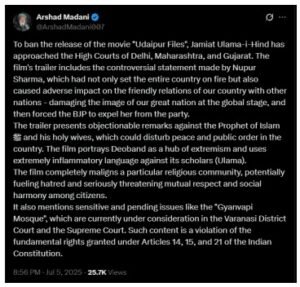 Adding complexity to India’s legal landscape is the involvement of the Jamiat Ulama-i-Hind, a Deoband-based Islamic organization that has faced scrutiny for defending individuals accused or convicted of terrorism. While the group claims it seeks justice for those allegedly falsely implicated, critics argue that its interventions risk signalling unwavering support to radical elements.
The organization has extended legal aid in several high -profile cases, including:
• Kamlesh Tiwari Murder (2021): Offered full legal aid to the accused in the assassination of Hindu leader Kamlesh Tiwari.
• Al-Qaeda Terror Suspects (2021): Deputed lawyers to defend alleged operatives in Uttar Pradesh.
• Ahmedabad Bomb Blasts (2022): Defended 49 convicts responsible for 21 bomb blasts that claimed nearly 56 lives.
While the Jamiat emphasizes the right to legal representation, public perception remains sharply divided, especially in cases with strong evidence against the accused.
Broader Implications: Justice vs. Public Perception The contrast between delayed justice and swift cinematic portrayal raises questions about India’s legal system. Delays prolong victims’ suffering and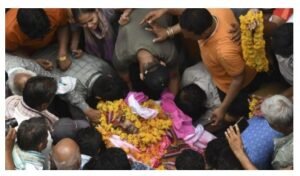 The Kanhaiya Lal case, combined with controversial legal interventions in other terror cases, encapsulates a critical challenge for India: balancing justice, the right to défense, and the need for swift accountability in acts of terror. Meanwhile, the fact that a movie dramatizing Lal’s murder reached audiences faster than a court verdict has become a stark symbol of judicial delay.
