
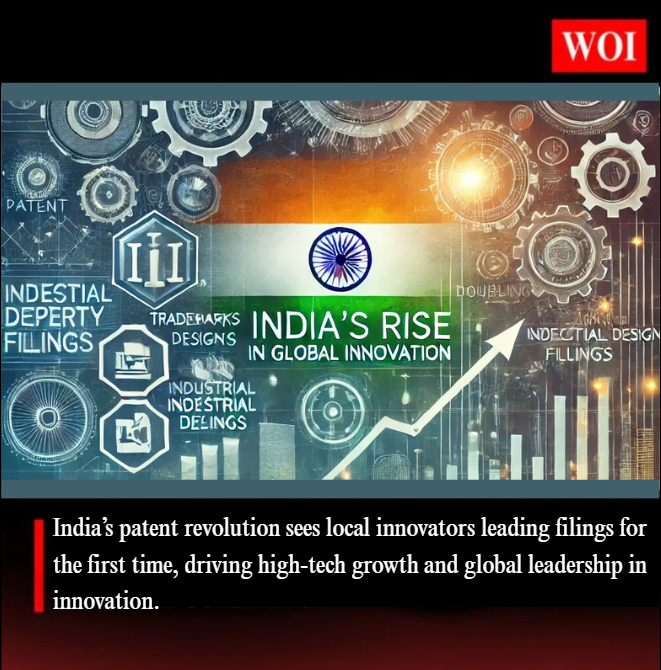
India’s innovation ecosystem has seen a major breakthrough, with Indian-origin patent filings surpassing those from any foreign country in 2023. For the first time, Indian applicants accounted for 57% of total patents, a sharp rise from less than 20% in the early 2000s. This marks India’s transformation from a technology consumer to a global technology creator.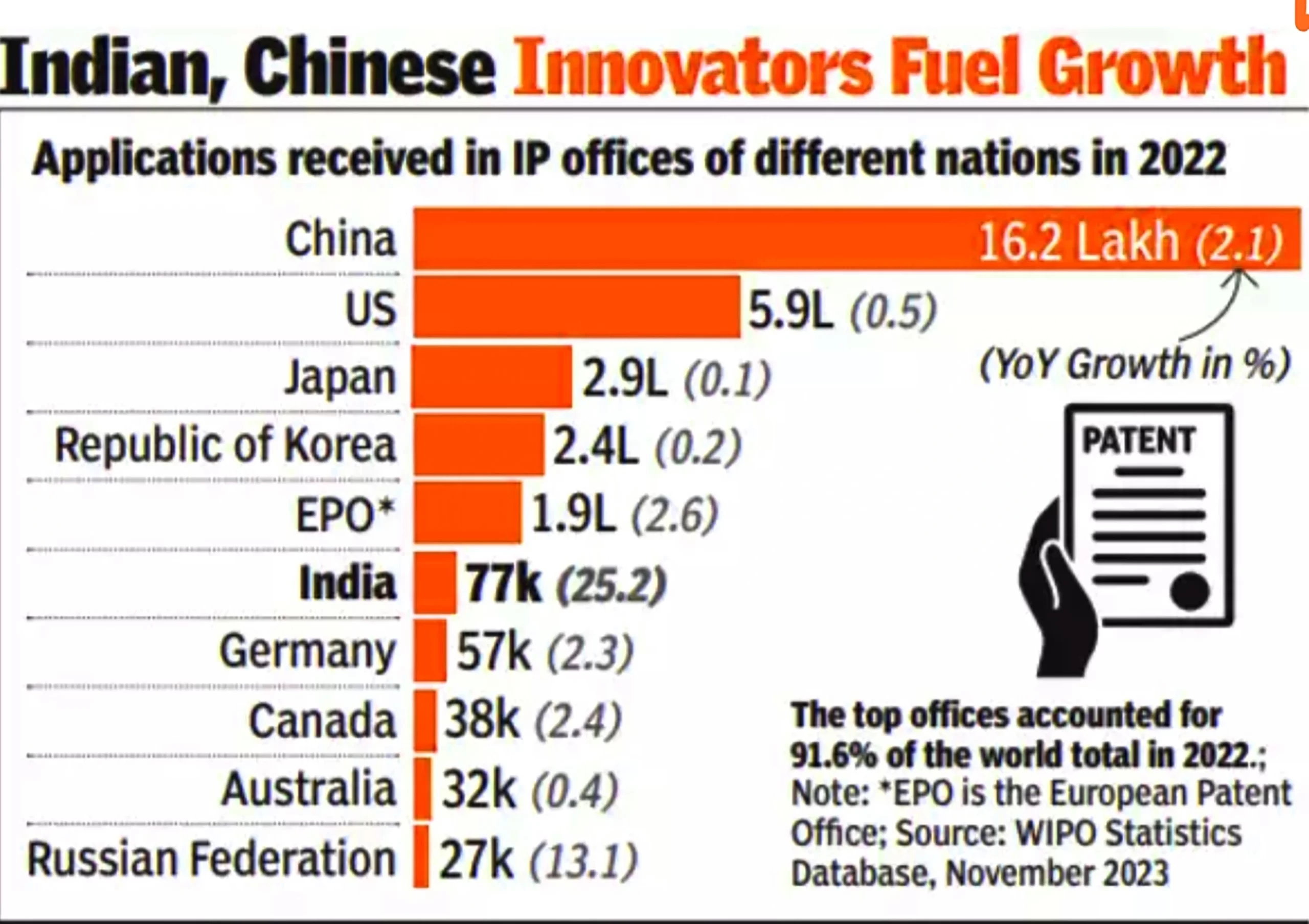
Government Push for Innovation
Policies like the National IPR Policy and Atal Innovation Mission, along with reforms such as faster patent examinations, reduced fees for startups and educational institutions, and full digitalisation, have made patenting simpler and more accessible.
Shifting Focus to High-Tech Research
Patent trends reveal a move away from traditional sectors to advanced fields. Computer science patents grew from 1.27% in 2000 to 26.5% in 2023, while biomedical and electrical engineering patents also saw sharp rises, reflecting India’s growing strength in cutting-edge research.
Faster Approvals, Stronger Innovation Cycle
Patent approvals, once taking 8–10 years, are now processed in 2–3 years, with some granted in the same year. This efficiency fuels quicker commercialisation and innovation cycles.
Rise of Individuals & Institutions
Unlike the past when companies dominated filings, today individuals and educational institutions lead with over 70% of total patents. Programmes like KAPILA have boosted awareness and entrepreneurship in academia, cementing India’s place in the global IP ecosystem.
India’s patent revolution signals a new era of innovation-driven growth, positioning the country as a rising leader in global technology.
