
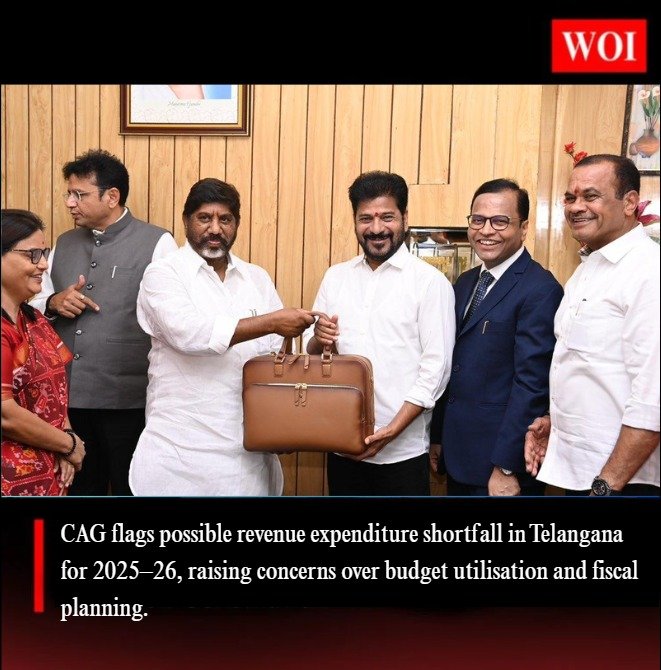
The Comptroller and Auditor General of India (CAG) has flagged concerns that Telangana may once again fall short of its revenue expenditure targets in the ongoing financial year 2025–26, continuing a pattern of under-utilisation seen in recent years.
According to official data reviewed by the CAG, Telangana’s revenue expenditure stood at approximately ₹1.48 lakh crore by January 2026, which is only around 65% of the budgeted estimate of ₹2.26 lakh crore for the full fiscal year. Expenditure figures for February and March—traditionally months of higher government spending—are yet to be accounted for.
A Repeated Trend
This is not an isolated instance. In 2024–25, the state achieved only about 80% of its projected revenue expenditure, spending nearly ₹1.77 lakh crore against a budget estimate of ₹2.21 lakh crore. The recurring gap between budgeted allocations and actual spending has drawn attention to weaknesses in fiscal planning and execution.
Why It Matters
Revenue expenditure largely covers welfare schemes, salaries, pensions, subsidies, and essential public services. Persistent under-spending in these areas can slow the rollout of development programmes, delay benefits to intended beneficiaries, and dampen overall economic momentum in the state.
Fiscal experts warn that while underspending may temporarily reduce deficits on paper, it can also indicate implementation bottlenecks, administrative delays, or overly optimistic budget projections. Over time, this may erode the credibility of budgeting processes and affect long-term growth.
Government’s View
State officials maintain that expenditure typically accelerates in the final quarter of the financial year, especially in March, and that the apparent shortfall may narrow once year-end figures are finalised. However, analysts note that even after accounting for last-quarter spending, Telangana has consistently missed its original targets in recent years.
Looking Ahead
As the state prepares future budgets, the CAG’s observations underline the need for more realistic expenditure projections, stronger monitoring mechanisms, and timely fund utilisation. Ensuring that allocated resources translate into actual spending on the ground will be crucial for sustaining welfare delivery, infrastructure development, and inclusive economic growth in Telangana.
